Android Development
A field technician working offline and a manager approving a request need different features, but both need an application they can rely on. Choosing a delivery team means looking beyond the first release: who tests the supported devices, controls the signing keys, and maintains the product as requirements change.

Android App Development Services From Design to Ongoing Support
Android app development services are the creation, design, and maintenance of mobile applications specifically for the Android operating system, which powers nearly 3.9 billion active devices worldwide. This vast user base underscores the importance of these services, which are provided by professional development firms using various platforms and tools. Developers often utilize environments like Android Studio, frequently enhanced with AI tools such as Gemini, to streamline workflows and improve UI design. Additionally, these services offer comprehensive solutions, including custom app development, UI/UX design, backend integration, testing, and ongoing maintenance, catering to diverse needs from startups to large enterprises across multiple industries.
Roadmap, Architecture and Lifecycle Management in Android Application Development
Android app development services focus on creating scalable, secure, and high-performance mobile applications by integrating advanced technologies. A strategic approach includes defining the right roadmap and architecture to ensure the application can grow alongside the business. For instance, utilizing modern programming languages like Kotlin and Java allows for robust technical execution, which is essential for building maintainable and scalable Android apps. Additionally, prioritizing user-centric design enhances engagement through clear and user-friendly UI/UX designs, which are crucial for effective app development. This comprehensive lifecycle management supports performance and security, making it vital for businesses looking to build scalable mobile tools on the Android platform.
As of 2026, Android remains the world’s most widely deployed mobile operating system, commanding over 70% of the global market share. The global Android app development market is projected to grow at a compound annual growth rate (CAGR) of 11.3% from 2026 to 2034. Beyond the initial build, an annual budget of 15% to 20% of the original development cost covers security patches, defect fixes, and the Android platform upgrades Google requires each year to keep an application listed on Google Play.

Importance of Custom Design in Android Apps
Custom design plays a crucial role in the effectiveness and success of Android apps. Here are key reasons why it matters:
- Enhanced User Experience (UX): Custom design enables Android app developers and app development companies to create user flows based on actual behavior, minimizing friction and incorporating delightful micro-interactions that improve the overall mobile app experience.
- Brand Differentiation: A unique design reflects a business’s brand voice and style, helping it stand out in a competitive market of Android apps and increasing user interest, which is crucial for any development company offering app development services.
- Adaptability and Performance: Custom design allows for adaptive layouts that ensure optimal performance across various Android mobile devices, including phones, tablets, and foldables, which is essential in mobile app development.
- Targeted Functionality: It ensures the Android mobile app addresses specific business challenges, allowing for the inclusion of essential features like offline syncing or tailored security protocols, which development companies prioritize in their services.
- User Retention: On average, Android app retention drops from 21.1% on the first day to just 2.1% by day 30, underscoring the vital role of custom design in maintaining long-term user engagement. A visually appealing and easy-to-navigate interface fosters user satisfaction, encouraging continued use of the application and supporting the goals of any app development company.
- Return on Investment (ROI): Investing in professional UX design as part of Android app development services pays back in ways a business can measure: fewer support requests, less rework during the build, and higher completion rates on the screens that carry revenue.
- Conversion Rate Optimization: Allocating just 10% of your development budget to UX design can lead to an 83% increase in conversion rates, a key metric for development companies focused on delivering effective mobile app solutions.
- User Abandonment Due to Poor Performance: Performance is a key component of design, as 53% of mobile visits are abandoned if a page takes more than 3 seconds to load, highlighting the importance of speed and efficiency in Android mobile app development services.
Custom design also shapes what the Android app development company builds under the surface. Business-specific Android apps often need workflows that no off-the-shelf template anticipates: field technicians who capture data offline and sync later, retail staff who scan inventory with the device camera, or managers who approve requests from a notification without opening the full application. Custom Android applications handle these cases because the development company designs the data model, the screens, and the permissions around the actual business process rather than forcing the process to fit a generic mobile app. Enterprise Android solutions add requirements such as single sign-on, device management, audit logging, and integration with Android APIs for hardware like barcode scanners or payment terminals. When comparing Android app development services, a buyer should look for a portfolio of custom Android solutions in a similar industry, ask how the development company gathered requirements, and check whether the delivered apps are still in active use.
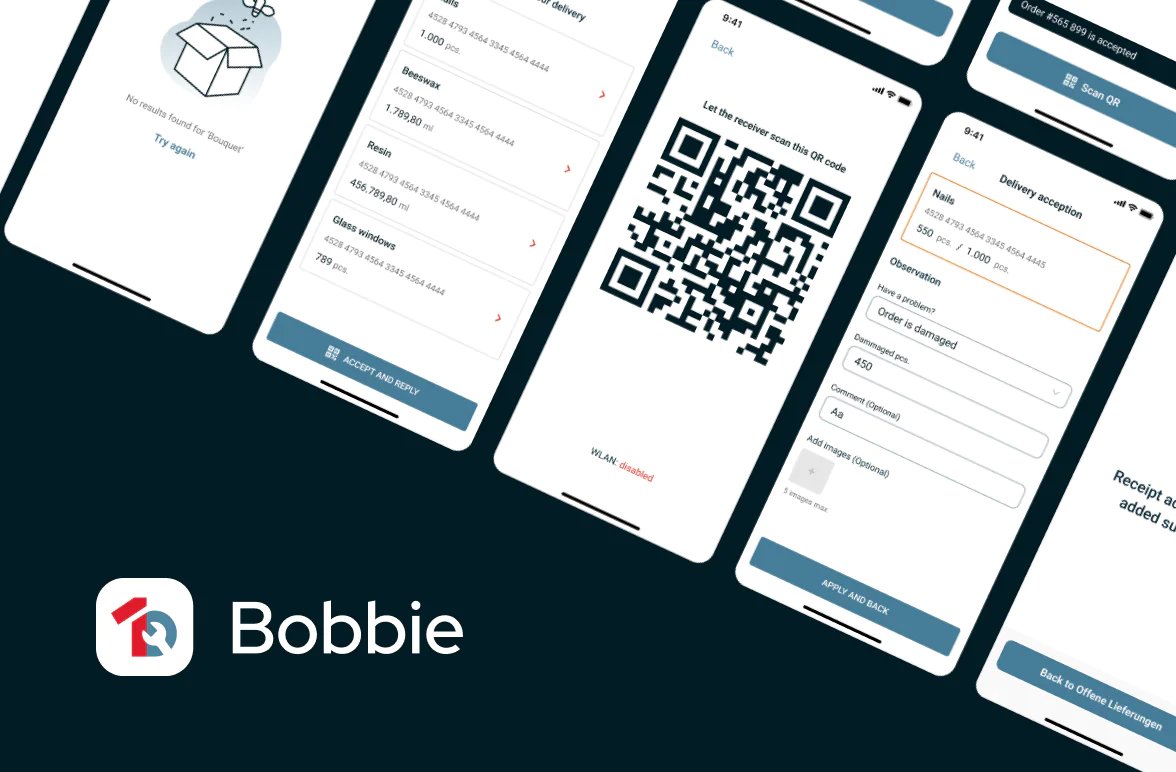
Ein-Des-Ein specializes in custom Android apps of this kind, and its case studies show the business problem, the design decisions, and the measurable outcome for each one.

Crafting Clear and User-Friendly UI/UX Designs for Android Apps
Crafting clear and user-friendly UI/UX designs for Android apps is a critical component of professional app development services, aimed at enhancing user satisfaction, engagement, and retention.
- Simplicity and Clarity: Designers focus on keeping Android mobile app interfaces clean and free of clutter to help users concentrate on key tasks within the mobile app. This principle is fundamental in mobile app development and essential for any Android app development services offered by a skilled app development company or development company specializing in Android apps.
- Consistency: Maintaining uniform colors, fonts, and layouts across Android apps builds user trust and familiarity, which is vital for development companies and app development services providers focused on Android app development and Android mobile app projects.
- Design Elements: The process involves defining visual components such as icons, brand themes, typefaces, and color schemes, often visualized through wireframes and mockups. These are crucial steps in Android app and mobile app development services provided by experienced app development companies and development companies alike.
- Usability and Interaction: UX design centers on creating intuitive user experiences and seamless flows between screens, while UI design addresses the visual and interactive elements. These are key aspects for development companies offering Android app and mobile app development services to ensure a smooth user journey.
- Responsiveness and Adaptation: Designs must be responsive and adapted to various screen sizes and interaction patterns common across the diverse Android mobile ecosystem, supporting compatibility with the target Android mobile devices and enhancing the overall mobile app experience delivered by app development services.
- User-Centric Approach: Development companies and app development services often conduct usability testing to refine designs based on real user interactions and behaviors. This ensures the final Android app product is both technically feasible and optimized for performance within the competitive Android app development market.
By focusing on simplicity, consistency, and a user-centric approach, development companies can create Android mobile apps that not only meet user expectations but also enhance satisfaction, engagement, and retention in the competitive market of Android apps. For Android app development services, investing in high-quality UI/UX design is a strategic business decision, with studies showing a potential return of $100 for every $1 invested. Effective UI/UX planning within mobile app development can significantly reduce costs, since poor design often leads to 50% of development time being wasted on avoidable rework. A well-designed user interface can be a powerful growth driver for Android mobile apps, capable of increasing conversion rates by 200% to 400%.
In practice, UI/UX design for Android is delivered alongside the engineering work rather than handed over as a finished file. Product designers and Android app developers at a development company map the user journeys first, then produce wireframes, clickable prototypes, and finally the high-fidelity Android app interfaces that follow Material Design guidance while carrying the client’s own brand. Designing Android apps this way lets the team validate navigation, form layouts, and onboarding screens with real users before a line of production code is written, which protects the app development budget from expensive redesigns. Because mobile apps for Android must run on thousands of device configurations, the design system defines how components scale across phone, tablet, and foldable screens, and how they behave in dark mode and with accessibility settings switched on. A business commissioning custom Android apps should ask the app development company to show the prototype stage of a past project and explain how user feedback changed the design; Ein-Des-Ein treats these design reviews as a standing part of every Android app development services engagement.
Pro-Tip: To avoid vendor lock-in and ensure your Android app remains maintainable and scalable, architect your codebase around open standards and modular abstractions rather than proprietary SDKs or tightly coupled third-party services. Use interfaces and dependency injection to decouple your business logic from specific vendors, making it easy to swap out implementations as your needs evolve. Favor open-source libraries with active communities and clear migration paths, and always encapsulate external dependencies behind your own wrapper classes. This approach not only reduces the risk of being tied to a single provider but also streamlines future updates, testing, and scaling as your app grows or as the technology landscape shifts.

Role of Coding With Kotlin and Java for Android App Development
The role of coding with Kotlin and Java in Android app development is defined by their interoperability, which allows both languages to be used within the same project. Since Google announced a Kotlin-first approach to Android development in 2019, it has become the primary choice for most professional Android developers, while Java remains a mature, widely adopted language.
- Interoperability: Kotlin and Java are fully interoperable, enabling development companies and app development services to integrate Kotlin into existing Java-based Android mobile app projects without requiring a full migration. Libraries written in one language can be seamlessly used in the other, which benefits Android app and mobile app development companies by streamlining development processes and enhancing collaboration across teams.
- Kotlin’s Role: Kotlin is designed to be more concise and safer than Java, reducing boilerplate code and offering features like null safety that help prevent common runtime crashes. Research indicates that Android apps incorporating Kotlin code are 20% less likely to crash than those built exclusively with other languages. Additionally, approximately 67% to 70% of professional developers report that using Kotlin has significantly increased their overall productivity. Kotlin also supports modern development tools like Jetpack Compose for UI building, making it a preferred choice for Android mobile app development companies and development companies focused on delivering robust mobile app development services. This adoption enhances the quality and reliability of Android app development services provided by app development companies.
- Java’s Role: Java remains a foundational language with a vast ecosystem and long-standing maturity, often recommended for beginners due to its straightforward object-oriented structure and abundant learning resources. Many legacy Android apps are built in Java, and it continues to be relevant for developers working on existing codebases or those applying their skills beyond Android mobile app development, including web or client-side applications. This makes Java essential for development companies and app development companies offering comprehensive Android app development services. As of late 2025, over 50% of professional Android developers utilize Kotlin as their primary programming language, while 30% continue to use Java as their main language.
In practice, Kotlin and Java coexist within the Android ecosystem, enabling development companies and app development services to build robust Android mobile apps and mobile app solutions. Key Kotlin features such as type inference, lambdas, and safe calls are widely adopted in Android app development, appearing in 98%, 93%, and 84% of Kotlin-based Android apps, respectively. Kotlin offers modern productivity enhancements ideal for Android mobile app development, while Java provides a stable, widely understood foundation that many app development companies rely on for maintaining legacy Android apps and supporting Android mobile platforms. This interoperability allows development companies to deliver comprehensive Android app and mobile app development services tailored to diverse project needs. Additionally, Kotlin developers in mobile-specific roles typically command 10% to 15% higher salaries than Java-focused developers in equivalent roles, reflecting the demand for expertise in modern Android app development within leading development companies.
For a buyer, the language choice matters less than how the development company applies it. Coding Android applications using Kotlin or Java with the current Android SDK, Jetpack libraries, and a clean architecture pattern produces Android app code that another team can read, test, and extend years later, which protects the business from being locked into a single vendor. A well-run Android app development company writes automated tests around its business logic, keeps dependencies current, and documents the build so the client owns a project that can be handed over intact. Buyers should ask which Kotlin and Java versions the team targets, how it manages the minimum supported Android version, and how integration with Android APIs such as location, camera, notifications, and in-app billing is handled and tested. It is also reasonable to request a short code review of a previous project, since the quality of the Android app code is the clearest evidence of how the mobile app development will actually be done. Ein-Des-Ein develops in Kotlin by default, maintains Java where existing Android apps require it, and gives clients full repository access from the first sprint.

Android App Development Services: Building Scalable Mobile Tools for Businesses
To build scalable mobile tools for businesses in Android app development, the following key aspects should be considered:
- Cloud Integration: Utilize cloud services to manage data efficiently in your Android mobile app, supporting easy scaling as the user base grows and enhancing the capabilities of Android apps within mobile app development services provided by a skilled app development company.
- Modular Architecture: Design the Android app using modular components, allowing app development companies or a development company to add features seamlessly without rebuilding the entire system, streamlining Android mobile app development and improving maintainability.
- Load Balancing: Implement load balancing to distribute requests across backend servers, reducing the risk of server overload and maintaining smooth performance for Android apps and Android mobile platforms, which is crucial for scalable app development services.
- Performance Monitoring: Regularly monitor app performance using analytics tools to identify bottlenecks and improve the user experience in Android app development services offered by development companies specializing in Android app and mobile app development.
- Agile Development: Adopt agile methodologies within your development company to enable quick adjustments based on market needs and user feedback, which is essential for effective Android app and mobile app development services delivered by an experienced development company.
By focusing on these elements, businesses can ensure their Android mobile app is not only functional but also scalable, supporting growth alongside their user base. With Android commanding approximately 70–73% of the global mobile operating system market, businesses developing scalable Android apps can reach an estimated 3.9 billion active Android devices. Professional Android app development typically ranges from $15,000 for basic utility applications to over $300,000 for complex, enterprise-grade platforms with real-time capabilities. To ensure a high-quality user experience, developers should agree on project-specific startup performance targets. Android vitals classifies warm starts of 2 seconds or longer and hot starts of 1.5 seconds or longer as excessive. Utilizing cross-platform frameworks can reduce development costs by 25–45% compared to building separate native iOS and Android applications. Additionally, businesses should plan for an annual maintenance budget equivalent to 15–20% of the original development cost to ensure long-term stability and security. When comparing Android app development services, a buyer should judge a development company on evidence rather than claims: shipped Android apps in a comparable domain, the named engineers who will actually do the work, a written architecture plan, and a plain statement of who owns the source code and the release signing keys. Ein-Des-Ein puts all four in front of a client before any contract is signed.
A typical engagement with an Android app development company runs as an end-to-end Android app project rather than a series of disconnected tasks. The work opens with Android app consulting: the development company reviews the business goals, the audience, and the devices the Android mobile app must support, then turns those findings into a scoped backlog and a technical architecture. From there the Android app developers build the application in sprints, demonstrating working features at the end of each cycle so the business can steer the mobile app development while changes are still inexpensive. Integration with Android APIs, third-party services, and existing back-office systems is planned early, because late integration can cause budget overruns in app development. The final stretch covers deploying apps to Google Play, including store listing assets, release signing, staged rollouts, and policy compliance. Buyers evaluating Android app development services should ask to see how a development company handled each of these stages on a comparable project, and Ein-Des-Ein documents every phase so a client can review the plan, the code, and the release history at any point.

Testing and Quality Assurance in App Development
Testing and quality assurance (QA) in Android app development is a critical, multi-faceted process designed to ensure an application is functional, secure, and provides a seamless user experience across the diverse Android ecosystem. Key methodologies include manual testing, which involves human interaction to assess usability, and automated testing, which utilizes tools like Appium for faster, repeatable tests. The scope of testing can vary from unit tests that verify isolated portions of code to end-to-end tests that validate entire user flows. Fixing a software defect after deployment can cost up to 100 times more than addressing the same issue during the design phase. Store review is a real gate on both mobile platforms: in 2024 roughly 24.9% of apps submitted to the Apple App Store were rejected, and a Google Play submission that breaches policy or crashes on review devices is turned back the same way, so quality assurance has to be finished before an Android app is submitted. Research indicates that 88% of users will abandon an app if they encounter bugs or glitches, making quality assurance a primary driver of user retention. Organizations that adopt holistic quality engineering approaches can see improvements in development cycle times ranging from 30% to 40%. Approximately 40% of large-scale enterprises now allocate more than 25% of their total development budget specifically to testing and quality assurance.
| Testing Approach | Scope | Timeline | Cost | Risk |
|---|---|---|---|---|
| Manual Testing | Usability and complex scenarios | Longer due to human involvement | Higher due to labor costs | Higher risk of human error |
| Automated Testing | Repeatable tests for functionality | Faster, can run concurrently | Lower long-term costs | Lower risk of oversight |
| Functional Testing | Feature validation | Medium | Medium | Medium |
| Performance Testing | Speed and responsiveness | Medium | Medium | Medium |
| Security Testing | Vulnerability assessment | Medium | Medium | High if overlooked |
For a business buying Android app development services, the practical questions are who performs the testing, on which devices, and when. A mature app development company assigns dedicated QA engineers to testing Android apps from the first sprint onward, so Android app testing runs in parallel with development instead of being compressed into the final weeks before launch. Coverage should include real-device testing across the manufacturers and Android versions the target audience actually uses, Android app performance checks for startup time, memory use, and battery drain, and Android app security reviews that cover data storage, network encryption, and authentication flows. Automated regression suites protect existing features every time the Android app code changes, while exploratory manual sessions catch usability problems automation misses. Before signing, a buyer should ask the development company for a sample test plan and a defect report from a previous mobile app project, then confirm that acceptance criteria are written down for each feature. Ein-Des-Ein delivers those test artifacts with every release, so the business can verify quality rather than take the development company’s word for it.

Ongoing Support and Maintenance for Android Apps
Android app development services do not end when the application reaches Google Play. Ongoing support and app maintenance keep the mobile app working as the platform, the devices, and the business change around it. Each year Google releases a new Android version with behavior changes, tighter permission rules, and updated Play Store policies, so Android app updates are required simply to keep the application installable and compliant. Device manufacturers introduce new screen sizes and hardware, third-party SDKs deprecate old versions, and security researchers publish vulnerabilities that need patching. A development company providing Android app maintenance monitors crash reports and performance analytics, fixes bugs as they appear, applies security patches, and ships Android app upgrades that move the codebase onto current libraries before old ones stop working. Post-launch enhancements, such as new features requested by users or integrations with new business systems, are planned in the same maintenance cycle so the Android app keeps earning its place on the customer’s device.
When choosing an Android app development company, a business should ask what the support agreement includes and how it is priced before the first sprint starts. A clear agreement names the response times for critical bugs, the frequency of routine Android app updates, who monitors the Play Console for policy warnings and crash spikes, and how feature enhancements are scoped and approved. It should also state who owns the source code, the signing keys, and the store listing, so the business is never dependent on a single vendor to publish a fix. Support for Android apps typically covers three layers: corrective work such as bug fixes and crash resolution, adaptive work such as OS and SDK upgrades, and evolutionary work such as new features and performance optimization. Ein-Des-Ein offers all three under one maintenance agreement for the Android apps it builds and for existing Android applications developed elsewhere, with the same developers who know the code handling the ongoing support.