





 mobile app design


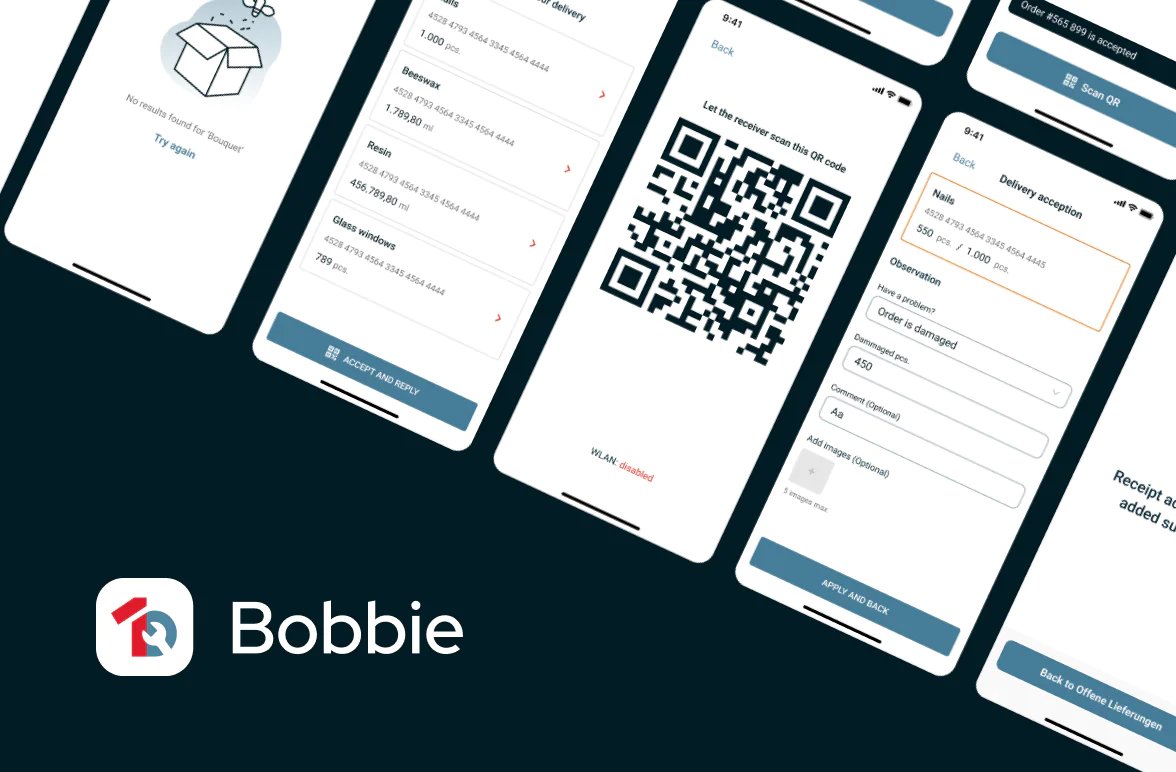










A polished screen is only part of a useful product. People also need to find information, understand their options, and complete the task they came to do. Defining those tasks before approving layouts gives researchers, designers, and engineers a shared basis for deciding what to build and test.
UX UI Design Services From User Research to Tested Interfaces
UX/UI design services are a multidisciplinary approach to creating digital products that prioritize both structural usability (UX) and visual interface (UI). These services typically include user research, wireframing, high-fidelity mock-ups, prototyping, and interface design to ensure products are intuitive and visually engaging. By treating design as a core discipline throughout the product development lifecycle—from initial research and strategy to final UI testing and front-end development—companies can enhance their product strategy, increase release velocity, and improve conversion metrics.

User Research and Strategy
User Research and Strategy serve as the foundational phase in UX/UI design services, intended to ground design decisions in evidence rather than assumptions. This process typically involves immersing the design team in the client’s business and user environment to align product goals with actual user needs.
- Data Gathering and Analysis: A design agency specializing in UX/UI design services conducts comprehensive research into customer behaviors through stakeholder interviews, user interviews, surveys, and analytics. This process often includes market and competitor analysis to identify opportunities and pain points relevant to product design, app development, and UI design challenges.
- Strategic Artifacts: Insights from research are synthesized into actionable tools such as user personas and user journey maps, which guide subsequent UX/UI design and development efforts, considering factors like team size and project scope within design services.
- Goal Alignment: This strategy phase ensures the design reduces friction, improves user experience, and supports business objectives such as increasing conversion rates or enhancing satisfaction in digital product design solutions focused on both user experience and UI design. A well-executed UX strategy can significantly impact the bottom line, with data showing potential conversion rate improvements of 200% to 400%.
- Evidence-Based Validation: By establishing this strategic foundation, teams can validate concepts early, minimize guesswork, and deliver user-centric, technically feasible products, and they can scope the work honestly because the hourly rate a design agency quotes is only meaningful once the number of research sessions and screens is known. Addressing usability issues early is critical, as fixing an error after development can cost 100 times more than resolving it during the design phase. Prioritizing UX strategy is equally important for retention, as 88% of online consumers report they are less likely to return to a site after a poor experience. While research methods vary, a typical user research study in 2026 costs between $3,000 and $25,000 depending on the scope and approach.
Buying research well starts with the brief. A design agency cannot price user research from a one-line request, so give any prospective partner the business outcome you need to move, the two or three user segments that matter most, and the decisions the research has to settle before engineering begins. That detail is what turns a vague hourly rate into a defensible quote, because the cost of design services at this stage is driven almost entirely by how many people have to be recruited and interviewed and how hard they are to reach. Ask which researchers will actually run the sessions rather than which names appear on the proposal, and ask for the raw session recordings and the analysis alongside the summary deck, so your own team can revisit the evidence a year later. It is also fair to ask what the agency learned from key clients in a comparable market, provided the answer stays inside whatever confidentiality those key clients agreed to. A partner that answers all three questions plainly will usually handle the rest of the digital product work the same way.

Information Architecture and Wireframing
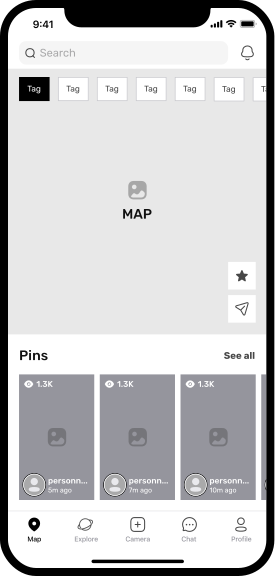
Information Architecture (IA) and wireframing are foundational stages in services related to UX and UI design that focus on structure and functionality before visual design is applied. IA involves organizing and structuring content to ensure users can navigate and find information intuitively, while wireframes serve as the “blueprint” for a digital product, focusing on layout and functionality without visual design elements. These processes are crucial for effective web design and can significantly impact the overall user experience. Investing in professional UX design, including structured information architecture and wireframing, can yield a significant return, with research indicating a potential 9,900% ROI or $100 for every $1 invested. UI/UX design projects typically range from $1,500 for smaller, focused tasks to over $150,000 for complex, enterprise-grade platforms that require extensive research, information architecture, and testing. Effective information architecture is essential for mobile success, as research shows 53% of mobile visits are abandoned if pages take longer than three seconds to load. Because that structural work decides whether users can complete tasks at all, industry practice suggests allocating 25% to 30% of the total project budget specifically to UX architecture, including wireframing and mapping user flows.
| Aspect | Information Architecture | Wireframing |
|---|---|---|
| Purpose | Organizes content for intuitive navigation | Blueprint for layout and functionality |
| Process | Uses techniques like card sorting | Creates low-fidelity representations |
| Deliverables | Sitemaps and user flows | Wireframes showing element placement |
| Benefits | Reduces navigation issues | Speeds up design and development |
| Cost Consideration | Usually billed at an hourly rate during discovery | Usually quoted per screen or as a fixed sprint |
Pro-Tip: To truly integrate UX/UI design with product development and cross-functional teams, embed designers directly into product squads from the earliest stages of ideation through launch and iteration. Encourage designers to participate in sprint planning, daily standups, and retrospectives alongside engineers and product managers, ensuring their insights shape technical decisions and business priorities in real time. Foster a shared vocabulary and clear documentation—such as living design systems and user journey maps—that everyone can reference, reducing miscommunication and rework. By making UX/UI a collaborative, ongoing conversation rather than a handoff, you’ll create products that are not only visually appealing but also deeply aligned with user needs and technical realities.

Visual Interface Design
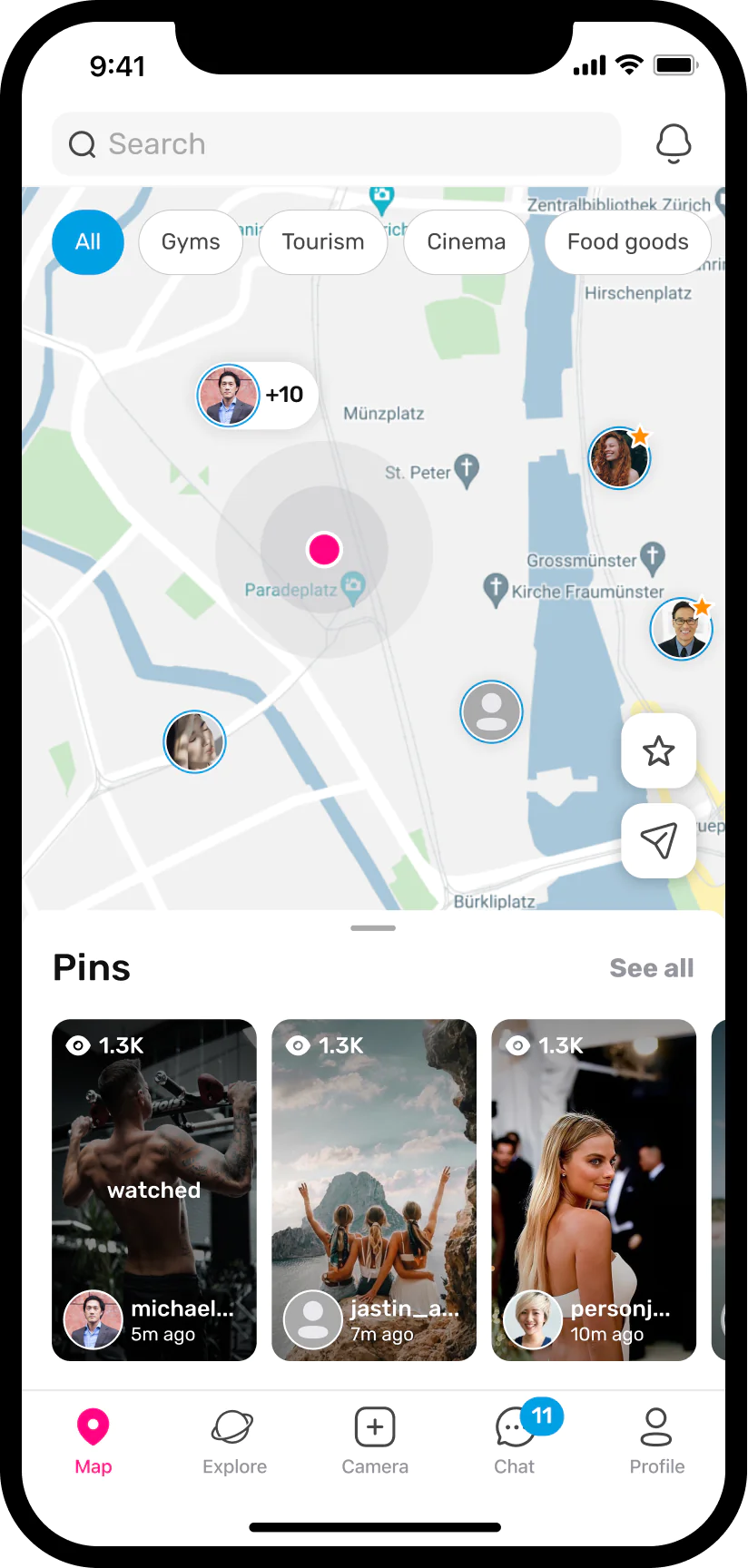
Visual UI design as part of services combining UX and UI focuses on crafting aesthetically engaging and functional interfaces that align with a brand’s identity. This process typically involves the application of modern design systems, color theory, typography, and interactive components to create visually appealing layouts that enhance the overall user experience. Four concerns shape the work at this stage:
- Brand Integration: Ensuring the interface reflects and reinforces the brand’s value and identity across all touchpoints, a key focus of product design within a design agency’s extensive UI and UX design offerings.
- Usability and Performance: Balancing beauty with functionality to ensure the design is intuitive, easy to navigate, and accessible, as effective UX design enhances user experience in app development and other digital products.
- Engagement: Using visual elements to capture user attention, encourage interaction, and create memorable experiences that resonate with customers, showcasing how UI design creates user interfaces that connect users to the brand.
- Strategic Layouts: Utilizing structured elements, such as clean grid layouts, to guide users through a product seamlessly and help them find information quickly, demonstrating how UX/UI design combines user experience and interface for optimal results across the product.
The visual layer is where most buyers first judge a design agency, so it is worth knowing what to look for in a portfolio rather than reacting to whichever screens look prettiest. Ask to see one product across three breakpoints instead of a single flattering hero shot, check that the type scale and spacing still hold up on a dense data screen rather than only on a marketing page, and confirm the colour choices keep sufficient contrast when a real photograph sits behind them. The global market for UI design is expanding rapidly, with forecasts predicting it will reach $11.31 billion by 2035, reflecting the growing importance of app development and mobile-first design strategies. With 63% of web traffic now coming from mobile devices, a partner that treats the phone layout as the primary composition and the desktop layout as the adaptation will generally ship a stronger digital product. Team size and hourly rate matter here as well: a small team at a higher hourly rate that owns both product design and the front-end handoff often costs less across a release than a larger, cheaper team split across two suppliers.

Design Systems Tailored for UI and UX Solutions
Design systems within UI and UX design offerings are structured frameworks of reusable components, visual assets, and guidelines used to ensure consistency, scalability, and efficiency across digital products.
- Function and Purpose: Design agencies providing services in UX and UI integrate design systems to standardize interfaces, helping teams deliver cohesive brand experiences and improve user satisfaction. This strategy reduces development costs by resolving issues early and speeds up app development through scalable, reusable components. Considerations such as team size and hourly rate often shape how these systems are applied within product design and UI design projects. Design systems have become a standard practice in the industry, with 68% of large companies now utilizing them to standardize UX patterns across their products and teams.
- Scope of Work: UX and UI design services typically involve creating design systems from scratch or migrating legacy systems to modern platforms like Figma or Adobe XD. This includes defining visual languages—such as typography, color palettes, and iconography—and building component libraries that internal teams can own and extend, ensuring consistency across product design and interface design efforts. In a Figma experiment on design systems, participants completed a design task 34% faster with a design system. The result measured design work, not a guaranteed increase in software development velocity.
- Maturity Integration: The implementation of design systems aligns with a company’s UX maturity level; growth-stage companies may adopt them for early process standardization, while enterprise-level organizations embed them within a comprehensive framework of research, product design, and strategy as part of their broader design services focused on UX/UI design. By utilizing shared standards and reusable components, organizations can accelerate their development cycles by up to 50% while simultaneously reducing technical debt. Consistent branding and familiar design systems are not just aesthetic choices; they are linked to a 41% higher trust perception among users.
Ownership is the part of a design system buyers most often forget to negotiate. A component library that lives only inside a design agency’s own workspace is a dependency rather than an asset, so the contract should say plainly that the files, the tokens and the documentation transfer to you, and that your people can edit them without paying for access. Match the ambition to your team size: a company with one in-house designer and two front-end engineers needs a small, strict set of components that genuinely get reused, whereas a larger product design group can carry a broader library and the governance needed to keep it current. Ask how the system is versioned, who reviews a proposed new component, and what happens to it when the next round of app development introduces a pattern nobody anticipated. For web design work in particular, confirm that the same tokens drive the production stylesheet instead of being retyped by hand, because a system that drifts out of sync with the code creates avoidable maintenance work.

UX/UI Design Adaptations for Mobile Apps and Websites
UX/UI design adaptations for mobile apps and websites take far more than shrinking a desktop layout. Mobile is a distinct discipline, grounded in device constraints and in the way people actually hold and use a phone. Key adaptations include:
- Input and Interaction: Services focused on UX and UI must support thumb-driven input and touch gestures (such as swipes) rather than relying on mouse hover effects. Tap targets should be at least 44pt to accommodate touch interactions and reduce user errors, enhancing usability in mobile app development and UI design projects.
- Navigation and Layout: To optimize limited screen space, navigation should be simplified to minimize steps needed to complete tasks. Responsive and adaptive design principles are fundamental in product design, enabling layouts to adjust seamlessly across various screen resolutions, aspect ratios, and device capabilities. These adaptations often depend on the design agency’s team size and expertise.
- Performance and Context: Mobile UX/UI design must consider intermittent connectivity, varying device performance—especially on mid-range hardware—and the “distracted environment” typical of mobile use. Test performance and layout separately: an app needs to respond promptly and remain usable in each supported orientation. Every second of delay in mobile page load time significantly impacts engagement, with a 1-to-10-second increase in load time leading to a 123% higher bounce probability.
- Accessibility and Readability: Effective design services incorporate larger fonts for headings, shorter paragraphs to reduce fatigue, and sufficient color contrast to support a diverse user base, all contributing to superior user experience and reflecting the quality of professional UX and UI design. Users form an opinion on a website’s quality and credibility in just 50 milliseconds, making initial visual design and layout critical for retention.
- Validation: Since lab tests may overlook real-world factors like latency and distraction, design decisions should be validated through session replays and data from actual device usage—a best practice recommended by experienced design agencies to refine product design efficiently. Research indicates that responsive websites improve task completion times by 32% compared to fixed-layout designs, directly enhancing user efficiency. Because the majority of visits now arrive on a handset, mobile-first design has moved from a best practice to a baseline requirement for any digital product.

Prototyping and Testing in User Experience and Interface Design
Prototyping and testing are essential steps in the process of UX and UI design offerings. Here are key aspects to consider:
- Validation and Refinement: Testing prototypes with real users helps identify usability issues and refine the user experience. Testing with as few as 5 users can uncover approximately 85% of usability problems, making it a highly efficient method for early-stage product design validation within design services offered by a design agency.
- Iterative Improvement: Use feedback from testing to optimize the design, ensuring alignment with user expectations and business goals. This process is essential for both UX design and UI design, especially when coordinating team size and hourly rate for app development projects.
- Clickable Mockups: Create interactive prototypes that simulate the final product, allowing for usability testing before full-scale implementation. This approach supports seamless collaboration between UX and UI design teams in a design agency setting.
- Risk Mitigation: Validate design concepts early to improve functionality and reduce the risk of costly changes during development. A prototype is also the cheapest place to settle an internal disagreement: a stakeholder who cannot picture a flow from a written specification will give a clear answer once they can click through it, which keeps scope from shifting after engineering has already started building.
- Journey Validation: Walk testers through complete user journeys on the prototype, not isolated screens, so the design is proven against the task a real customer came to finish. Integrating UX prototyping during a project’s concept phase can reduce overall product development cycles by 33% to 50%, which benefits app development timelines and resource allocation within a design agency.
- Audience Fit: Recruit test participants who match the intended audience rather than whoever is nearest to hand, because a prototype that reads clearly to the team that drew it often confuses the people it was drawn for. Moderated sessions surface the reasoning behind a wrong tap, unmoderated runs give you volume at lower cost, and most product design programmes use both across a release cycle.
Budget testing as a repeating line item rather than a single milestone. Most design services quote prototyping and testing per round, and the second and third rounds are usually far cheaper than the first, because the recruitment screener, the task script and the analysis template already exist by then. Two modest rounds on a rough but realistic prototype almost always teach you more than one large round on a polished one, since the second round is where you find out whether the fix actually worked. Agree in advance what happens when a round fails: a design agency that has built rework into its plan will simply revise and retest, while one that treats every change as a variation will send a fresh estimate at its full hourly rate. Ask as well who is allowed to watch the sessions. When engineers from the app development team see two or three users struggle with the same control, the fix tends to survive into the shipped digital product instead of being argued away in a later meeting.

Design Services for UX and UI
What a buyer actually pays for design services comes down to four things: how much is already known about the users, how many screens and states the digital product has to cover, whether a design system must be built from scratch or only extended, and how much of the work runs alongside app development rather than ahead of it. Most design agency engagements are quoted either as a fixed scope or at an hourly rate, and the total fee depends on team size, seniority, location, and the time required. The spend is easiest to justify on the retention side: investing in high-quality mobile UX pays off in loyalty, with 74% of users reporting they are more likely to return to a platform that offers a strong mobile experience. The 2025 ranges below cover typical web design and mobile engagements. Treat them as a starting point for scoping rather than a price list, and ask any prospective partner to show comparable work for key clients at your size and stage.
| Engagement | Typical design cost | What moves it within the range |
|---|---|---|
| Web application interface design | $1,000 to $8,000 | Number of screens and states, and how much of the interface is standard patterns rather than custom work. |
| Mobile application interface design | $3,000 to $15,000 | Android and iOS together cost more than either alone, because of device fragmentation and the separate platform guidelines each store expects. |
| Basic mobile app design | About $10,000 | A single platform, a short screen list and an existing brand to design within. |
| Complex website redesign | $25,000 to $95,000 | Scope of the content inventory, the depth of research and information architecture, and whether a design system is delivered with it. |