Digital Transformation Guide 2026 for SMB Growth Success


Every IT manager knows the challenge of mapping out digital transformation when resources and expertise feel stretched. For small to medium-sized businesses, a clear assessment is the foundation that uncovers existing strengths and highlights opportunities for growth. Using tools like the Discovery Tool, organizations worldwide gain objective insight into their current digital capabilities across technology, skills, and innovation. By prioritizing a structured digital health checkup, you set the stage for scalable, custom web and mobile solutions that fuel sustainable progress.
Table of Contents
- Step 1: Assess Current Digital Capabilities
- Step 2: Define Strategic Objectives and Outcomes
- Step 3: Select Scalable Technologies and Partners
- Step 4: Build and Deploy Tailored Applications
- Step 5: Validate Solution Performance and Scalability
Quick Summary
| Key Insight | Explanation |
|---|---|
| 1. Assess Digital Capabilities Thoroughly | Conduct a comprehensive evaluation using tools to identify current strengths and weaknesses in technology and skills. |
| 2. Set SMART Strategic Objectives | Define clear, measurable goals that align with business needs to guide your digital transformation efforts. |
| 3. Choose Scalable Technologies and Partners | Select technology solutions and partners that can adapt to your evolving needs and support long-term growth. |
| 4. Build Custom Applications | Develop tailored solutions with user-centric designs and modular capabilities that address specific operational challenges. |
| 5. Validate Performance Continuously | Implement ongoing performance validation to ensure solutions are effective, secure, and scalable with business growth. |
Step 1: Assess Current Digital Capabilities
Kicking off your digital transformation journey requires a crystal-clear understanding of where your organization currently stands in terms of technological readiness. Think of this assessment as a digital health checkup that will help you identify strengths, weaknesses, and opportunities for improvement.
To conduct a comprehensive evaluation, you’ll want to explore digital capability discovery tools that provide structured assessments. These tools help organizations map out their existing digital infrastructure and skills across several critical dimensions:
- Technology Infrastructure: Evaluate current hardware, software, and network capabilities
- Digital Skills Inventory: Assess employee technological proficiency levels
- Data Management: Review existing data collection, storage, and analysis processes
- Innovation Readiness: Measure organizational culture and adaptability to technological change
Your goal is not just to identify gaps, but to create a strategic roadmap for digital evolution.
Start by gathering detailed information through employee surveys, technical audits, and performance data. Look for quantifiable metrics that reveal your current digital maturity. This might include metrics like average employee digital skill levels, technology adoption rates, or existing system integration capabilities.
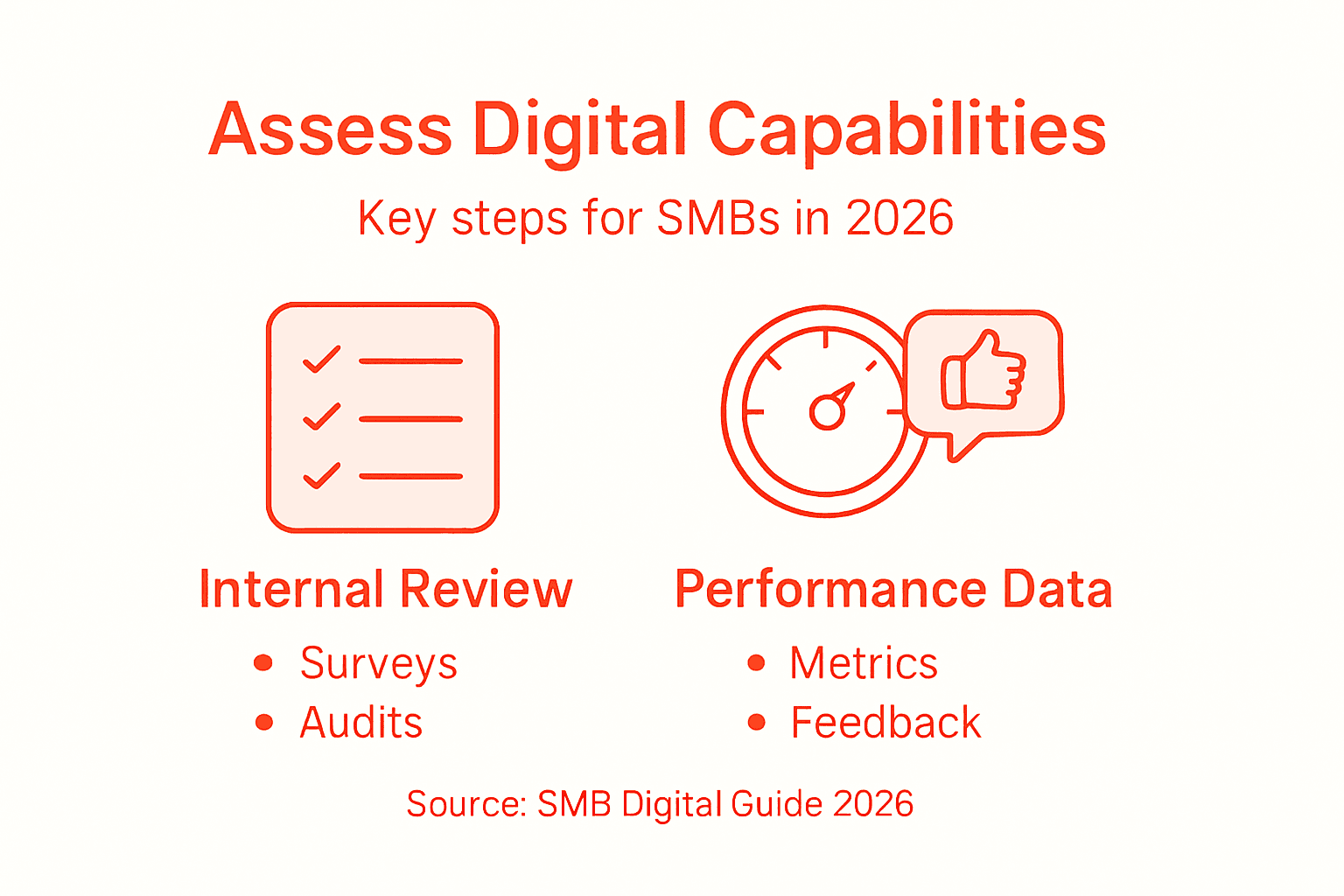
The assessment should cover multiple organizational layers – from technical infrastructure to human capital and strategic alignment. Pay special attention to areas where technology can potentially streamline operations, enhance productivity, or create new value streams.
Here’s a quick comparison of digital capability assessment methods:
| Assessment Method | Key Benefits | Best Use Case |
|---|---|---|
| Employee Surveys | Reveal user skill gaps | Identifying training needs |
| Technical Audits | Uncover system inefficiencies | Reviewing infrastructure health |
| Performance Data Analysis | Quantifies maturity levels | Tracking technology adoption |
| External Consultants | Deliver unbiased insights | Comprehensive strategic evaluation |
Pro tip: Consider engaging an external digital transformation consultant to provide an unbiased, comprehensive assessment of your current technological landscape.
Step 2: Define Strategic Objectives and Outcomes
After assessing your current digital capabilities, the next critical step is defining clear, actionable strategic objectives that will guide your digital transformation journey. This phase transforms your initial assessment into a targeted roadmap for technological evolution.
To develop meaningful objectives, you’ll want to set strategic goals using SMART frameworks. These objectives should align with your broader business strategy and address specific organizational needs:
- Productivity Enhancement: Identify specific processes to streamline
- Cost Reduction: Target areas where digital solutions can minimize operational expenses
- Customer Experience Improvement: Define measurable customer interaction metrics
- Innovation Acceleration: Establish clear innovation and technological adoption targets
Strategic objectives are not just wishful thinking – they are precise, actionable commitments to organizational growth.
Consider leveraging established strategic planning frameworks like OKRs (Objectives and Key Results) or the Balanced Scorecard to create comprehensive, measurable goals. Each objective should have clear key performance indicators (KPIs) that allow you to track progress and demonstrate tangible value.
Here is a summary of strategic planning frameworks for digital transformation:
| Framework | Strengths | Typical Implementation |
|---|---|---|
| OKRs | Drives measurable progress | Goal tracking with quarterly reviews |
| Balanced Scorecard | Ensures broad alignment | Integrates financial and operational targets |
| SMART Goals | Clarifies objectives | Sets specific, achievable targets |
Prioritize objectives that offer the most significant potential impact on your business. This might mean focusing on digital initiatives that directly address current operational bottlenecks, enhance competitive positioning, or open new revenue streams.
Pro tip: Engage cross-functional teams during objective setting to ensure alignment and gather diverse perspectives that can uncover hidden transformation opportunities.
Step 3: Select Scalable Technologies and Partners
With your strategic objectives defined, the next crucial step is selecting technologies and partners that can transform your digital vision into reality. This process requires careful evaluation of solutions that not only meet your current needs but can grow alongside your business.
When exploring potential technologies, focus on collaborative partnerships supporting digital transformation that offer more than just product solutions. Look for partners who provide:
- Advisory Services: Strategic guidance beyond basic implementation
- Flexible Infrastructure: Scalable solutions adaptable to your evolving needs
- Training Programs: Continuous learning and skill development support
- Interoperability: Technologies that integrate seamlessly with existing systems
The right technology partner becomes an extension of your team, not just a vendor.
Evaluate potential partners through a comprehensive lens that considers technical capabilities, industry experience, and cultural alignment. Prioritize solutions that demonstrate:
- Proven track record with businesses similar to yours
- Clear roadmap for technological innovation
- Responsive customer support
- Transparent pricing models
Remember that scalability isn’t just about technology – it’s about building a partnership that can support your long-term growth trajectory. Look for providers who understand your specific industry challenges and can offer customized solutions.
Pro tip: Request detailed case studies and conduct pilot tests before making final technology commitments to ensure true alignment with your business objectives.
Step 4: Build and Deploy Tailored Applications
With strategic objectives and technology partners in place, you’re ready to transform your digital vision into tangible, custom applications that drive business growth. Building tailored solutions requires a methodical approach that aligns technological capabilities with your specific organizational needs.
Focus on developing custom applications for SMB innovation that provide targeted functionality and competitive advantages. Your application development strategy should incorporate:
- Modular Design: Create flexible solutions that can evolve with your business
- User-Centric Interface: Prioritize intuitive experiences for seamless adoption
- Data Integration: Ensure smooth connectivity with existing systems
- Scalability: Build applications that can expand as your business grows
Custom applications are not just tools – they’re strategic assets that differentiate your business.
Consider a phased development approach that allows for iterative improvements and minimizes risks:
- Define core functional requirements
- Prototype and validate key features
- Develop minimum viable product (MVP)
- Test with select user groups
- Implement and continuously refine
Prioritize technologies that offer robust integration capabilities and support your specific industry requirements. Look for development partners who understand your unique challenges and can translate business needs into technical solutions.

Pro tip: Engage end-users early in the development process to ensure your custom applications truly address real-world operational challenges.
Step 5: Validate Solution Performance and Scalability
After deploying your custom applications, the critical next phase involves rigorously validating their performance and ensuring they can scale effectively with your business growth. This validation process transforms theoretical potential into tangible, reliable digital solutions.
Adopt a comprehensive approach to digital solution validation in SMEs that covers multiple performance dimensions:
- Performance Metrics: Measure response times, system load, and user experience
- Resource Utilization: Track computational efficiency and infrastructure demands
- Stress Testing: Simulate high-traffic scenarios and potential system bottlenecks
- Security Validation: Ensure robust protection against potential vulnerabilities
Performance validation is not a one-time event – it’s an ongoing commitment to technological excellence.
Develop a structured validation framework that includes:
- Establish baseline performance benchmarks
- Conduct systematic load and stress tests
- Collect comprehensive user feedback
- Analyze system logs and performance data
- Iterate and optimize based on insights
Pay close attention to how your solutions adapt to changing business requirements. The goal is not just functional performance, but creating flexible digital infrastructure that can evolve alongside your organizational needs.
Pro tip: Implement automated monitoring tools that provide real-time insights into application performance, allowing you to proactively address potential scalability challenges.
Unlock Your SMB’s Potential Through Tailored Digital Transformation Solutions
Digital transformation can be overwhelming when you need to assess your current capabilities, define strategic objectives, and find scalable technologies that truly fit your growth ambitions. This guide highlights common challenges such as identifying precise pain points, building custom applications that align with your business, and validating performance to ensure lasting scalability. You might feel stuck navigating these complex steps alone.
At Ein-des-ein, we specialize in turning these challenges into opportunities. Our expert team of over 80 professionals brings deep experience in custom web and app development, UX/UI design, and backend technologies like Node.js and Python. Whether you need a fully tailored digital solution or a dedicated offshore development team to accelerate your roadmap, we provide scalable, high-quality applications designed with your unique strategic goals in mind. Explore how we help businesses like yours innovate and scale effectively by visiting our full-cycle development services and learn about building your dedicated offshore team.

Take control of your digital transformation journey today. Don’t let technology gaps slow your SMB’s growth. Partner with Ein-des-ein to craft and deploy the perfect digital solutions that grow alongside your business. Reach out now to start transforming your vision into measurable success.
Frequently Asked Questions
How do I assess my organization’s current digital capabilities?
To assess your organization’s current digital capabilities, start by evaluating your technology infrastructure, digital skills inventory, data management processes, and innovation readiness. Conduct employee surveys and technical audits to gather quantifiable data within a few weeks to map out your strengths and weaknesses.
What strategic objectives should I set for my digital transformation journey?
Define strategic objectives that focus on enhancing productivity, reducing costs, improving customer experience, and accelerating innovation. Use the SMART framework to create specific, measurable goals that align with your business strategy and monitor progress over the next quarter.
How can I choose the right technologies and partners for successful digital transformation?
Select technologies and partners by prioritizing those that offer advisory services, flexible infrastructure, and robust training programs. Evaluate potential partners based on their industry experience and customer support capabilities to ensure they can grow with your business over time.
What steps should I take to build and deploy custom applications for my business?
To build and deploy custom applications, start with defining core requirements, then move through prototyping, MVP development, testing, and implementation. Engage end-users early in the process to address real operational challenges, aiming to complete the initial phases within a few months.
How can I validate the performance and scalability of my deployed digital solutions?
Validate the performance of your digital solutions by measuring metrics like response times and user experience, and conducting stress tests to simulate high-traffic scenarios. Establish a structured framework for continuous feedback and optimization, aiming to complete the initial validation within the first month of deployment.