Guide to offshore team setup: 35% better collaboration in 2026


Building an effective offshore development team feels like a gamble. Up to 60% of offshore software projects fail due to communication and cultural issues, leaving business leaders frustrated with missed deadlines and budget overruns. But it doesn’t have to be this way. This guide provides a clear, step-by-step framework to set up offshore teams that actually work. You’ll learn the prerequisites, hiring strategies, management techniques, and how to avoid common pitfalls that derail projects.
Table of Contents
- Prerequisites And Readiness Assessment
- Step 1: Planning And Defining Team Roles
- Step 2: Hiring And Onboarding Offshore Developers
- Step 3: Management And Communication Strategies
- Common Mistakes And Troubleshooting
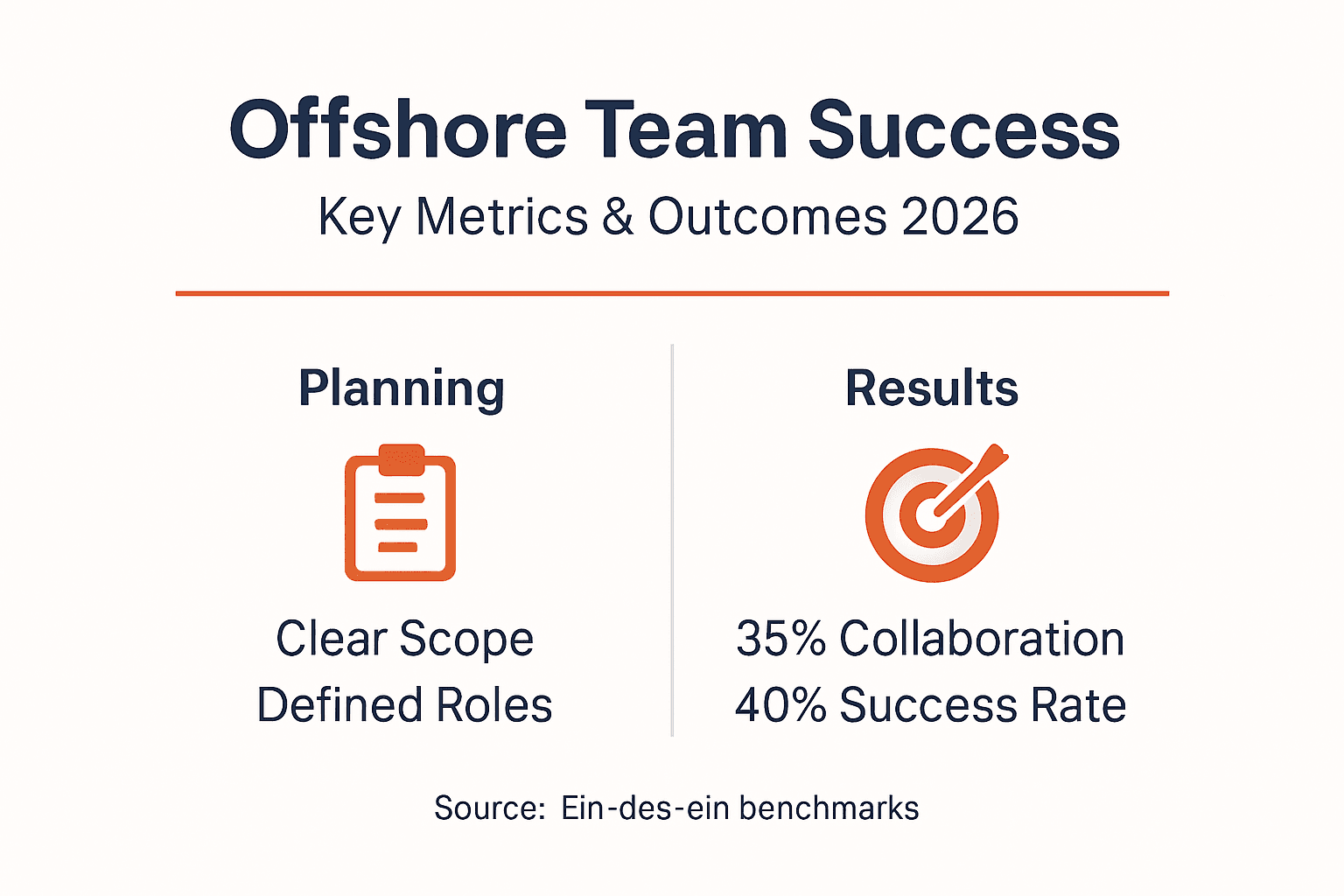
- Expected Results, Outcomes, And Success Metrics
- How Ein-Des-Ein Supports Your Offshore Development Needs
- Frequently Asked Questions About Offshore Team Setup
Key takeaways
| Point | Details |
|---|---|
| Prerequisites matter | Clear scope, budget, and legal frameworks increase success rates significantly. |
| Structured hiring reduces churn | Technical and cultural vetting with pilot projects improves team fit. |
| Agile management boosts results | Overlapping work hours and daily stand-ups improve collaboration by 35%. |
| Avoid common mistakes | Poor communication and vague roles cause over 60% of failures. |
| Measure success properly | Setup takes 3-6 months with 40% higher success rates when done right. |
Prerequisites and readiness assessment
You can’t build a house without a foundation. The same applies to offshore teams. Before you post a single job listing, you need to establish clear prerequisites that set your project up for success.
Start by defining your project scope and technical requirements. What exactly are you building? Which technologies will you use? Vague requirements lead to mismatched hires and wasted time. Clear scope and role definitions lead to a 40% increase in project success, so invest the effort upfront.
Next, set a realistic budget and timeline. Offshore development can reduce costs, but quality teams aren’t dirt cheap. Research market rates in your target regions. Factor in recruitment time, onboarding costs, and management overhead. Your timeline should account for a 3 to 6 month ramp-up period before the team hits full productivity.
Choose your offshore region carefully. Consider these factors:
- Skill availability in your required technology stack
- Time zone overlap with your core team
- Cultural compatibility and English proficiency
- Political stability and business infrastructure
- Cost versus quality trade-offs
Finally, ensure legal compliance. Work with international business lawyers to establish proper contracts, intellectual property protections, and employment agreements. Different countries have varying labor laws, tax implications, and data privacy regulations. Getting this wrong can expose your business to serious legal risks.
Pro Tip: Create a readiness checklist before starting recruitment. If you can’t check every box, pause and address the gaps. Rushing into hiring without proper preparation is the fastest way to join the 60% failure statistic.
Ein-des-ein’s offshore software development services help you navigate these prerequisites. Our team has established dedicated offshore teams for dozens of clients, streamlining the readiness phase so you can move to hiring with confidence.
Step 1: Planning and defining team roles
Once your prerequisites are locked in, it’s time to design your team structure. Poor planning here creates role confusion, duplicated work, and finger-pointing when things go wrong.
Start by identifying key roles based on your project complexity. A typical offshore development team includes:
- Frontend developers for user interfaces
- Backend developers for server logic and APIs
- QA engineers for testing and quality assurance
- DevOps specialists for deployment and infrastructure
- Project managers or Scrum masters for coordination
- UI/UX designers for product design (if needed)
Determine team size based on your project scope and timeline. Small projects might need 3 to 5 developers. Larger initiatives could require 10 to 15 people across multiple specializations. Resist the urge to over-hire. Smaller, focused teams often outperform bloated ones.
Align roles with your technology stack. If you’re building a React frontend with a Node.js backend, hire developers experienced in those specific technologies. Generic full-stack developers sound appealing but often lack the depth you need for complex features.

Plan for overlapping work hours. This is critical. If your team works completely opposite hours, collaboration suffers. Aim for at least 3 to 4 hours of daily overlap. This enables real-time communication, faster decision-making, and stronger team cohesion.
Clear role definitions prevent project delays and confusion. Document each role’s responsibilities, deliverables, and reporting structure before you start interviewing. Use a RACI matrix (Responsible, Accountable, Consulted, Informed) to clarify who does what. This prevents the “I thought you were handling that” conversations that kill momentum.
Pro Tip: Build your team gradually. Start with core roles (lead developer, project manager) then add specialists as the project evolves. This phased approach reduces initial costs and lets you adjust based on actual needs.
For guidance on structuring effective offshore teams, explore our insights on team roles planning. Proper planning at this stage pays dividends throughout your project lifecycle.
Step 2: Hiring and onboarding offshore developers
Hiring the right people makes or breaks your offshore team. A resume and a quick video call aren’t enough. You need a structured recruitment process that validates both technical skills and cultural fit.
- Create detailed job descriptions that specify required technologies, experience levels, and soft skills like communication and problem-solving.
- Use multi-stage technical assessments including coding tests, system design interviews, and live pair-programming sessions.
- Evaluate cultural fit through behavioral interviews. Ask about past remote work experiences, communication preferences, and how they handle ambiguity.
- Run pilot projects with finalists. Pay them for 1 to 2 weeks of real work before making full-time offers. This reveals work quality, communication style, and reliability better than any interview.
- Check references thoroughly. Talk to previous managers and teammates about collaboration, reliability, and technical capabilities.
Poor onboarding increases developer churn by 35%. Once you hire, invest heavily in onboarding. New offshore team members need more than a Slack invite and access to your code repository.
Provide detailed onboarding documentation covering your tech stack, coding standards, development workflows, communication protocols, and company culture. Record video walkthroughs of your codebase architecture. Assign a mentor from your core team to answer questions and provide guidance during the first month.
Set clear performance expectations from day one. Define what success looks like in the first 30, 60, and 90 days. Establish regular check-ins to provide feedback and address concerns before they become problems.
Pro Tip: Create an onboarding checklist with specific tasks and learning objectives. Track completion and use it to identify where new hires struggle. This helps you improve the onboarding process for future team members.
Ein-des-ein excels at effective offshore hiring and onboarding. Our recruitment process includes technical vetting, cultural assessments, and structured onboarding programs that get developers productive quickly.
Step 3: Management and communication strategies
You’ve hired a great team. Now you need to manage them effectively. Distance amplifies management challenges, so you need deliberate strategies to maintain productivity and engagement.
Adopt agile methodologies. Daily stand-ups keep everyone aligned on priorities and blockers. Sprint planning sessions ensure clear goals for each iteration. Retrospectives at the end of each sprint uncover process improvements and team concerns. These rituals provide structure that’s especially valuable for distributed teams.
Use the right communication tools:
- Slack or Microsoft Teams for instant messaging and quick questions
- Jira or Linear for task tracking and project management
- Zoom or Google Meet for video calls and screen sharing
- Confluence or Notion for documentation and knowledge sharing
- GitHub or GitLab for code reviews and version control
Establish overlapping working hours. This cannot be overstated. Overlapping work hours improve real-time collaboration effectiveness by 35%. Schedule your critical meetings, stand-ups, and collaborative sessions during these overlap windows. Asynchronous communication works for some tasks, but complex problem-solving needs real-time interaction.
Conduct regular cultural competency training for both onshore and offshore team members. Cultural differences in communication styles, feedback preferences, and work habits can create friction. Address these proactively through workshops and open discussions.
Track progress with clear KPIs. Monitor sprint velocity, code quality metrics, deployment frequency, and bug resolution times. Use these indicators to spot problems early. If velocity drops or bug counts spike, investigate immediately. Don’t wait for a crisis.
Provide continuous feedback through regular one-on-ones with each team member. These private conversations build trust, surface concerns, and give you insight into team morale. Make feedback specific and actionable, focusing on behaviors and outcomes rather than personalities.
Pro Tip: Record important meetings and decisions for team members who can’t attend live due to time zones. This keeps everyone informed and reduces the “I missed that discussion” problem.
Our offshore team management strategies incorporate proven agile practices and communication frameworks. We help you establish management rhythms that keep offshore teams engaged and productive.
Common mistakes and troubleshooting
Even with solid planning, things can go wrong. Recognizing common pitfalls early helps you correct course before minor issues become project killers.
Poor communication and cultural misunderstandings cause over 60% of offshore project failures. Combat this by establishing communication norms upfront. Define response time expectations for different message types. Encourage over-communication rather than under-communication. When in doubt, schedule a quick video call instead of endless message threads.
Vague role definitions create confusion and duplicated work. If team members aren’t clear on their responsibilities, tasks fall through the cracks or get done twice. Document roles clearly before hiring and revisit them regularly as the project evolves.
Inadequate onboarding leaves new hires floundering. They waste time figuring out basics instead of contributing value. Invest in thorough onboarding with documentation, mentorship, and clear 30-60-90 day plans. The upfront time investment pays back many times over in faster productivity.
Neglecting performance tracking lets problems fester. If you’re not monitoring key metrics, you won’t notice when velocity drops or quality declines until it’s too late. Implement dashboards that give you real-time visibility into team performance.
Ignoring team feedback breeds resentment and disengagement. Your offshore team members see problems you don’t. Create safe channels for them to raise concerns without fear of retribution. Act on their feedback to show you value their input.
Pro Tip: Use sprint retrospectives not just for process improvements but to unearth hidden team challenges. Ask specific questions about communication, tools, and workload. The patterns you see across retrospectives reveal systemic issues worth addressing.
Our experience helps clients avoid common offshore pitfalls. We’ve seen these mistakes repeatedly and built processes to prevent them from the start.
Expected results, outcomes, and success metrics
What should you realistically expect from a well-executed offshore team setup? Setting proper expectations prevents disappointment and helps you evaluate ROI accurately.
Typical offshore team setup completes within 3–6 months with 40% higher success rates when scope and roles are clearly defined. The first month covers recruitment and initial onboarding. Months two and three involve ramping up productivity as team members learn your systems and workflows. By months four to six, the team should be operating at full capacity.
Cost savings vary by region but are substantial. Offshore development can reduce hourly rates by 50% or more compared to onshore teams in North America. However, factor in management overhead, communication tools, and occasional travel for team building. Net savings typically range from 30% to 60%.
Agile practices boost sprint success rates by approximately 30%. Teams using daily stand-ups, sprint planning, and retrospectives consistently deliver more features on time compared to those without structured processes.
Measure success with these KPIs:
| Metric | Target | Why It Matters |
|---|---|---|
| Sprint velocity | Stable or increasing | Shows team productivity and predictability |
| Delivery on time | 80%+ of commitments met | Indicates realistic planning and execution |
| Budget adherence | Within 10% of estimates | Reflects cost control and planning accuracy |
| Code quality | Low bug counts, high test coverage | Ensures sustainable long-term development |
| Team retention | Under 15% annual churn | Signals team satisfaction and stability |
You should see productivity improvements within the first six months as your team matures. Well-managed offshore teams often match or exceed onshore team output once they’re fully ramped up. The key is patience during the initial setup period and consistent investment in communication and management.
Pro Tip: Track leading indicators like code review turnaround time and Slack response rates. These predict future productivity better than lagging indicators like completed story points.
Ein-des-ein’s offshore team success benchmarks come from years of building and managing distributed teams. We help you set realistic targets and achieve them through proven processes.
How ein-des-ein supports your offshore development needs
Building an offshore team from scratch is complex. You need expertise in recruitment, legal compliance, management practices, and cultural integration. That’s where ein-des-ein comes in.

We offer tailored offshore software development services that handle every aspect of team setup and management. Our experts help you define roles, recruit top talent, implement effective onboarding, and establish management practices that maximize collaboration and delivery speed.
With over 80 professionals experienced in technologies like Node.js, React, Python, and TypeScript, we provide the technical depth your projects demand. Our web development services span full-cycle development from planning through deployment, ensuring your offshore team has the support and infrastructure needed to succeed.
We leverage agile methodologies and communication frameworks proven to increase sprint success rates and reduce common pitfalls. Our offshore software development services include ongoing management support, helping you maintain team productivity and engagement as your project evolves.
Partner with ein-des-ein to build a dedicated development team that scales with your business. We minimize the risks and maximize the benefits of offshore development, turning what feels like a gamble into a strategic advantage.
Frequently asked questions about offshore team setup
How long does it take to set up an effective offshore team?
Typical setup takes 3 to 6 months from initial planning through full productivity. The first month covers recruitment and hiring. Months two and three involve onboarding and initial project work. By months four to six, the team operates at full capacity.
What are the biggest challenges in managing offshore teams?
Communication barriers and time zone differences create the most problems. Cultural misunderstandings in feedback styles and work habits also cause friction. Address these through overlapping work hours, clear communication norms, and cultural competency training for both onshore and offshore members.
How much can I save with an offshore development team?
Cost savings range from 30% to 60% compared to onshore teams in North America. Exact savings depend on your offshore region, team composition, and management overhead. Eastern Europe typically costs more than Southeast Asia but may offer better time zone overlap. Balance cost with quality and communication considerations.
What technologies are best suited for offshore development?
All modern technologies work well offshore if you hire the right specialists. Popular stacks include React and Node.js for web applications, React Native or Flutter for mobile apps, and Python for backend services. The key is finding developers with proven experience in your specific technology choices.
How do I ensure code quality from offshore teams?
Implement rigorous code review processes, automated testing, and continuous integration. Set clear coding standards upfront. Use tools like SonarQube for quality metrics and enforce minimum test coverage requirements. Regular pair programming sessions between onshore and offshore developers also maintain quality and share knowledge.
What size offshore team should I start with?
Start small with 3 to 5 core developers plus a project manager. This minimizes initial costs and complexity while you establish processes and communication patterns. Scale up gradually as you prove the model works for your organization. Smaller teams are easier to manage and often more productive than large ones.