Custom web apps: business growth benefits in 2026


Many business owners hesitate to invest in custom web applications because they believe myths about excessive costs and complexity. The truth is that tailored digital solutions often deliver stronger ROI, better scalability, and tighter alignment with your strategic goals than off-the-shelf alternatives. This guide cuts through the confusion, explaining what custom web apps really are and how they drive measurable business growth.
Table of Contents
- Understanding Custom Web Applications
- Key Benefits Of Custom Web Applications For Businesses
- Common Misconceptions About Custom Web Apps
- Custom Web Apps Vs. Off-The-Shelf Software
- How Custom Web Applications Support Business Growth
- The Custom Web App Development Process
- Practical Considerations And Decision Criteria
- Summary And Next Steps
- Transform Your Business With Expert Custom Web Development
Key takeaways
| Point | Details |
|---|---|
| Custom web apps tailor technology to unique business workflows | They align precisely with your operations rather than forcing you into generic templates. |
| They support scalability, enhanced security, and seamless integration | Growth-ready architecture adapts as your business expands without performance penalties. |
| Long-term ROI and operational efficiency often exceed off-the-shelf alternatives | Despite higher upfront investment, custom apps reduce operational costs by up to 30% over five years. |
| Understanding misconceptions helps realistic expectations | Clearing myths about cost and deployment timelines leads to smarter investment decisions. |
| Development process involves analysis, design, iteration, and maintenance | Active collaboration ensures the final product matches business objectives and user needs. |
Understanding custom web applications
A custom web application is software designed specifically for your business processes and accessed through a web browser. Unlike generic off-the-shelf platforms, custom web applications provide tailored functionality designed specifically to meet business goals, eliminating unnecessary features that bloat costs and confuse users. These browser-based tools require no downloads, making them accessible from any device with internet connectivity.
The key difference lies in alignment. Off-the-shelf software serves broad markets with generic features, forcing you to adapt your workflows to fit the tool. Custom apps flip this dynamic. They mold to your existing processes, reducing friction and accelerating adoption across your team.
Browser-based delivery ensures you can push updates instantly without coordinating desktop installations. This agility supports rapid iteration as your business evolves. Security patches, feature enhancements, and performance improvements deploy seamlessly, keeping your technology current without operational disruption.
Custom web apps connect directly to your strategic objectives. Whether you need to automate complex approval workflows, integrate disparate data sources, or deliver a unique customer portal, tailored development ensures every feature serves a clear business purpose. This focus eliminates the waste common in one-size-fits-all solutions.
Businesses considering why invest in custom web apps should evaluate how closely current tools match their actual needs. Gaps between software capabilities and business requirements signal opportunities for custom development.
Core characteristics of custom web applications:
- Designed around specific business logic and workflows
- Accessible via web browsers on any device
- Scalable architecture supporting growth without redesign
- Direct integration with existing systems and databases
- Ongoing refinement based on user feedback and changing needs
Key benefits of custom web applications for businesses
Custom web apps deliver tangible advantages that directly impact your bottom line. Scalability tops the list. As your user base grows, properly architected custom applications handle increased load without performance degradation. You avoid the painful migration cycles that plague businesses outgrowing off-the-shelf tools.
Integration capabilities reduce operational silos. Custom apps connect seamlessly with your CRM, ERP, accounting software, and other business-critical systems. This unified data flow eliminates manual data entry, reduces errors, and gives you real-time visibility across operations. Off-the-shelf solutions often require expensive middleware or custom plugins to achieve similar integration.
Security customization addresses your specific compliance requirements and risk profile. Rather than accepting generic security measures, you can implement controls tailored to your industry regulations and threat landscape. This precision protects sensitive data while avoiding unnecessary restrictions that hamper productivity.

User experience customization drives engagement and satisfaction. When your team works with interfaces designed for their exact workflows, productivity rises and training time drops. Custom web applications improve efficiency and delivery, contributing to cost reductions that compound over time.
Businesses exploring scalable custom app development gain competitive advantages through features competitors cannot easily replicate. Your custom application becomes a strategic asset, not just another software license.
Major business benefits:
- Scalability supporting growth without performance loss
- Deep integration reducing data silos and manual work
- Security protocols matching your specific compliance needs
- User experiences designed for your actual workflows
- Competitive differentiation through unique capabilities
Pro Tip: Involve end users early in the design process to ensure the interface matches their mental models and daily tasks. This upfront investment dramatically accelerates adoption and reduces resistance to change.
Common misconceptions about custom web apps
Myth 1: Custom apps are prohibitively expensive. Many businesses fixate on initial development costs without considering total cost of ownership. Custom apps often reduce long-term operational costs by up to 30% despite higher initial investment. Off-the-shelf software racks up licensing fees, integration costs, workaround development, and productivity losses from poor fit.
Myth 2: Off-the-shelf software deploys faster. While generic platforms can launch quickly, this speed advantage evaporates during integration and customization phases. Businesses spend months configuring off-the-shelf tools, building workarounds, and training staff on clunky interfaces. Custom development timelines include these integration steps upfront, delivering a complete solution faster than you might expect.
Myth 3: Custom development serves only large enterprises. Scalable approaches make custom apps viable for SMBs and startups. Agencies offering modular development can start with core features and expand functionality as your business grows. This phased approach controls costs while delivering immediate value.
Organizations that clearly articulate their business objectives and involve stakeholders throughout development see the strongest ROI from custom applications. The investment pays dividends through improved efficiency, reduced errors, and capabilities that directly support revenue growth.
Myth 4: Maintenance requirements overwhelm small teams. Modern development practices and cloud infrastructure simplify ongoing maintenance. Many businesses partner with development agencies for continued support, gaining expert resources without hiring full-time technical staff.
Myth 5: Custom apps lock you into rigid systems. The opposite is true. Custom applications built with modern architecture adapt more easily than off-the-shelf platforms. You control the roadmap, prioritizing features that match evolving business needs rather than waiting for vendors to update their generic products.
Custom web apps vs. off-the-shelf software
The choice between custom and off-the-shelf software hinges on several factors. Cost structures differ fundamentally. Off-the-shelf tools require lower upfront investment but impose recurring licensing fees, often with per-user pricing that escalates as you grow. Custom apps demand higher initial development but eliminate ongoing licensing costs.
The custom software market was valued at USD 179.90 billion in 2024 and continues growing as businesses recognize the strategic value of tailored solutions. This trend reflects recognition that generic software rarely delivers competitive advantages.
Flexibility separates the two approaches dramatically. Off-the-shelf platforms offer limited customization, forcing you to adapt your processes to fit the software’s constraints. Custom apps flex to match your exact workflows, eliminating friction and preserving the processes that make your business unique.
| Factor | Custom Web Apps | Off-the-Shelf Software |
|---|---|---|
| Initial cost | Higher upfront investment | Lower initial purchase |
| Ongoing costs | Maintenance and hosting | Recurring licenses and per-user fees |
| Flexibility | Fully tailored to business needs | Limited customization options |
| Integration | Seamless with existing systems | Often requires middleware or plugins |
| Scalability | Built for growth from start | May require migration as you scale |
| Security | Customized to specific requirements | Generic security measures |
| Competitive advantage | Unique capabilities | Same features as competitors |
Pros and cons summary:
Custom apps excel when you need unique workflows, deep integration, or competitive differentiation. They suit growing businesses willing to invest strategically in technology that evolves with them.
Off-the-shelf software works for standard processes with minimal integration needs. It serves businesses prioritizing speed over fit and willing to adapt workflows to software limitations.
How custom web applications support business growth
Process automation through custom apps reduces operational costs while accelerating workflows. When you eliminate manual data entry, approval bottlenecks, and redundant tasks, your team focuses on high-value activities that drive revenue. This efficiency compounds, freeing resources for strategic initiatives rather than operational firefighting.
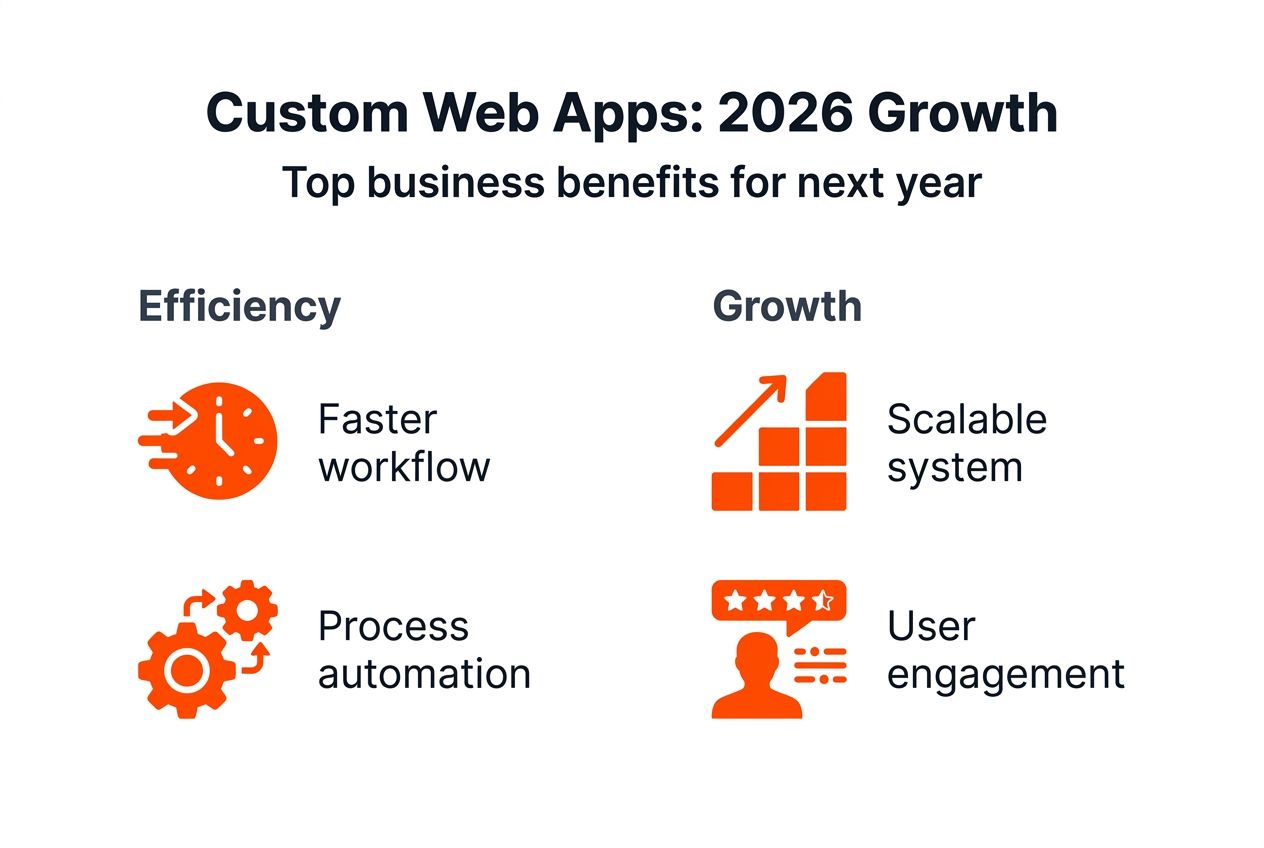
Enhanced user experience drives customer loyalty and referral growth. Increasing user engagement and automating processes with custom apps leads to higher retention rates and stronger word-of-mouth marketing. Customers who find your digital tools intuitive and helpful become advocates for your business.
Custom features enable competitive innovations that off-the-shelf platforms cannot match. When you develop capabilities tailored to your market niche, competitors using generic software struggle to keep pace. This differentiation protects margins and positions you as an industry leader.
Scalable architecture supports business pivots and expansions without requiring complete rebuilds. As market conditions shift or new opportunities emerge, your custom app adapts through targeted enhancements rather than costly replacements. This agility accelerates your response to competitive threats and customer demands.
Businesses exploring types of web applications discover options ranging from customer portals to internal management systems. Each type serves specific growth objectives when designed around actual business needs. Investing in custom web apps for growth delivers returns through multiple channels simultaneously.
Growth impact areas:
- Operational efficiency through workflow automation
- Customer retention via superior user experiences
- Competitive differentiation through unique features
- Market agility enabled by adaptable architecture
- Data insights supporting strategic decisions
Pro Tip: Prioritize scalable architecture from day one, even if you start with basic features. Building growth capacity into your foundation costs far less than retrofitting later when business demands increase.
The custom web app development process
Step 1: Requirement gathering and business goal alignment. Development teams work closely with stakeholders to understand your workflows, pain points, and strategic objectives. This discovery phase establishes success criteria and identifies features that deliver the highest business value. Thorough analysis upfront prevents costly revisions later.
Step 2: Design and prototype development. Designers create wireframes and interactive prototypes that validate the user experience before coding begins. This iterative design process ensures the interface matches how your team actually works, not how developers assume they work. Stakeholder feedback refines the design until it meets all usability requirements.
Step 3: Frontend and backend development. Developers build the application using modern frameworks and best practices. Frontend work creates the user interface and experience. Backend development handles data management, business logic, and integrations with existing systems. Parallel workstreams accelerate delivery while maintaining code quality.
Step 4: Testing and quality assurance. Rigorous testing validates functionality, security, performance, and usability. Teams check every feature against requirements, probe for security vulnerabilities, and simulate real-world usage patterns. This comprehensive validation prevents embarrassing bugs and security gaps from reaching production.
Step 5: Deployment and system integration. The application launches into your production environment with careful monitoring to ensure smooth operation. Integration testing confirms seamless data flow with existing systems. Training materials and support resources help users adopt the new tool quickly.
Step 6: Ongoing maintenance and iterative improvements. Post-launch support addresses issues, optimizes performance, and adds features based on user feedback. This continuous refinement keeps the application aligned with evolving business needs. Many businesses partner with enterprise application development services for ongoing technical support without maintaining in-house development teams.
Businesses considering custom mobile app development investment follow similar processes, with platform-specific considerations for iOS and Android development.
Practical considerations and decision criteria
Analyze total cost versus long-term ROI before committing to custom development. Calculate not just development expenses but also the value of improved efficiency, reduced errors, and competitive advantages. Compare this against ongoing licensing fees, integration costs, and productivity losses from off-the-shelf alternatives. The math often favors custom apps for businesses with unique needs.
Examine your existing system architecture for integration feasibility. Custom apps deliver maximum value when they connect seamlessly with your current tools. Businesses running modern, API-enabled systems find integration straightforward. Legacy systems may require additional middleware or phased modernization, affecting timelines and budgets.
Assess your internal technical capacity honestly. Some businesses prefer maintaining development expertise in-house for rapid iteration and deep institutional knowledge. Others find greater value partnering with specialized agencies that bring broader experience and established processes. Your decision should match your strategic focus and resource availability.
Consider scalability needs aligned with growth plans. If you anticipate rapid user growth, geographic expansion, or significant feature additions, invest in architecture that supports these changes. Starting with scalable foundations costs less than rebuilding later. Discuss your five-year vision with development teams to ensure the technical approach matches your ambitions.
Businesses exploring investing in app development should evaluate both immediate needs and future possibilities. Custom software advantages for startups often center on agility and differentiation in competitive markets.
Key evaluation criteria:
- Total cost of ownership over 3-5 years
- Integration complexity with existing systems
- Internal technical resources and capabilities
- Scalability requirements for anticipated growth
- Timeline constraints and business urgency
Pro Tip: Prioritize clear business objectives and stakeholder alignment upfront to reduce project risk. Projects with strong executive sponsorship and well-defined success metrics deliver better outcomes than those driven solely by technical teams.
Summary and next steps
Custom web applications deliver tailored solutions that enhance operational efficiency, support scalable growth, and create competitive advantages. They offer precise alignment with your unique workflows, superior integration with existing systems, and security measures matching your specific requirements. While initial investment exceeds off-the-shelf alternatives, the long-term ROI through reduced operational costs and improved capabilities often justifies the expense.
Successful custom app projects start with clear business objectives and realistic assessment of needs. Understanding the development process, from requirement gathering through ongoing maintenance, helps set appropriate expectations and ensures productive collaboration with development teams.
Businesses ready to explore custom web applications should evaluate their specific pain points, growth plans, and technical capabilities. Partnering with experienced development experts accelerates time to value while reducing implementation risks. The strategic advantages of tailored digital solutions position forward-thinking businesses for sustained growth in increasingly competitive markets.
Action steps for business owners:
- Document current workflow inefficiencies and technology gaps
- Calculate total cost of ownership for current software solutions
- Define clear business objectives custom apps would address
- Consult with development experts to explore feasibility and approach
- Visit Ein-Des-Ein to learn about professional custom app development services
Transform your business with expert custom web development
Ein-Des-Ein specializes in crafting custom web applications that align exactly with your business objectives. Our team of over 80 professionals delivers end-to-end development, from initial discovery and UX/UI design through deployment and ongoing support. We build scalable solutions using modern frameworks and best practices, ensuring your application grows with your business.

Our web development services cover everything from customer-facing portals to internal management systems. We also offer enterprise application development services for larger organizations requiring complex integrations and advanced security. Our UX and UI design services ensure your application delights users while supporting business goals. Partner with experts who understand both technology and business strategy to realize your digital transformation vision.
FAQ
What is a custom web app?
A custom web app is software designed specifically for your business needs and accessed through web browsers. Unlike generic off-the-shelf platforms, it includes only features that serve your unique workflows and strategic objectives. This tailored approach eliminates unnecessary complexity while delivering capabilities competitors cannot easily replicate.
Are custom web applications more expensive than off-the-shelf options?
Initial development costs typically exceed off-the-shelf purchases, but total cost of ownership often favors custom apps. You eliminate recurring licensing fees, reduce integration expenses, and avoid productivity losses from poor software fit. Many businesses see positive ROI within two to three years through operational efficiency gains alone.
Can small and medium businesses benefit from custom web apps?
Absolutely. Scalable development approaches make custom apps viable for SMBs and startups by starting with core features and expanding over time. This phased strategy controls costs while delivering immediate business value. Growing businesses gain technology that evolves with them rather than forcing painful migrations as they scale.
How do custom web apps integrate with existing software?
Custom applications are designed to connect seamlessly with your current digital ecosystem through APIs and standard integration protocols. This tailored integration reduces data silos, eliminates manual data entry, and ensures consistency across platforms. Development teams assess your existing architecture during planning to ensure smooth connectivity.
What does the custom web app development process involve?
The process includes requirement gathering, design, prototyping, coding, testing, deployment, and ongoing maintenance. Active collaboration with business stakeholders throughout ensures the final product matches your objectives and user needs. Most projects take three to six months depending on complexity, with phased delivery enabling early value realization.