Why Startups Need Mobile Apps: 40% Cost Cut & 90% AI Use


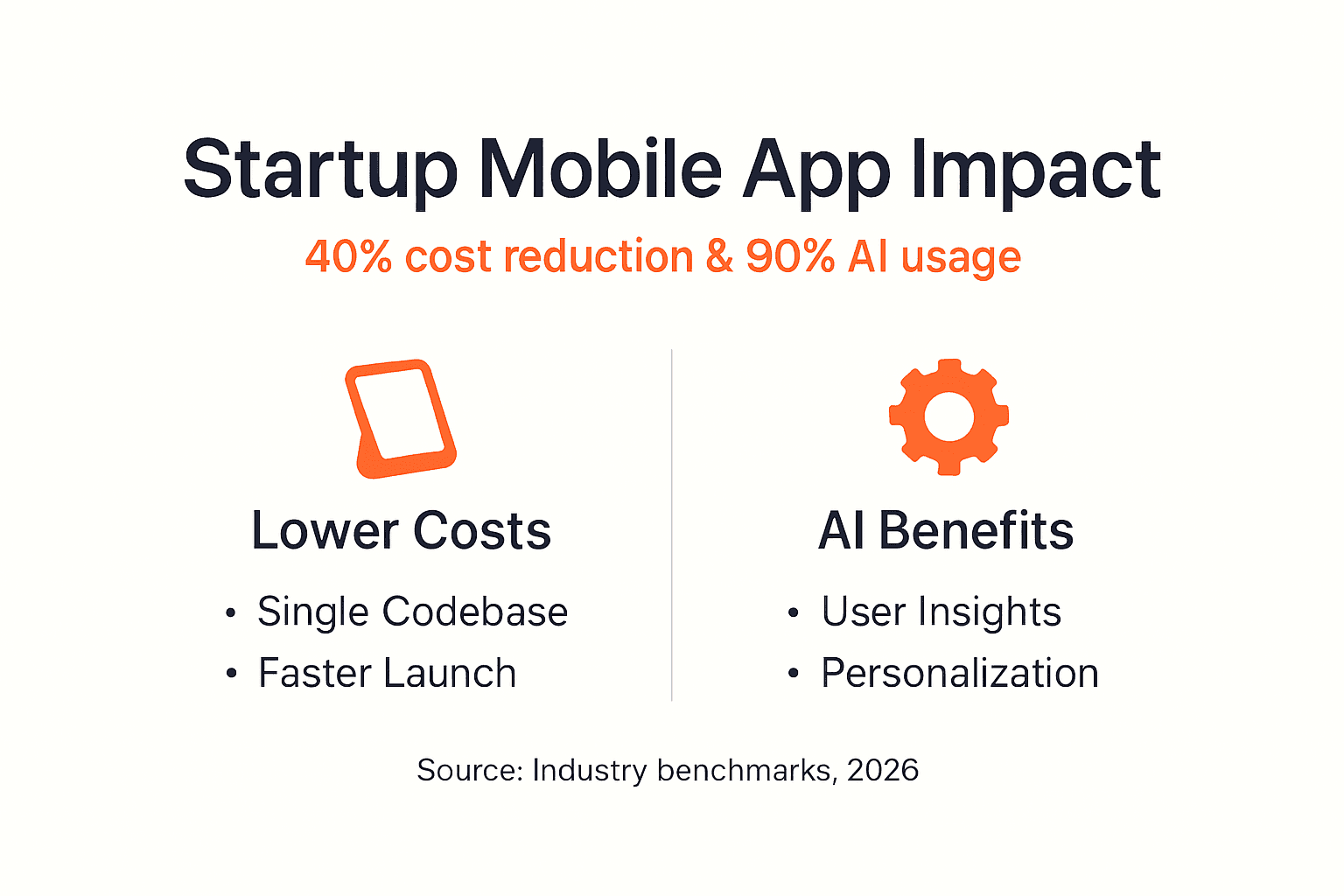
Most startup founders see mobile apps as expensive marketing tools, but this mindset misses the bigger picture. Apps aren’t just promotional channels—they’re engines for automation, personalization, and scalable growth. By 2026, 90% of new mobile apps will be built with AI as a native core, not just an add-on. Technologies like AI, 5G, and cross-platform frameworks are revolutionizing how startups build and scale. If you’re still treating apps as optional, you’re leaving money on the table. Let’s explore expert mobile app development tips that reveal the real strategic value.
Table of Contents
- The Strategic Importance of Mobile Apps for Startups
- Technological Drivers Transforming Startup Mobile Apps in 2026
- Common Misconceptions and Strategic Considerations for Startup Apps
- Choosing the Right Development Approach: Native, Cross-Platform, or PWA?
- Scaling App Development: Cost-Effective Strategies and Dedicated Teams
- Security, Privacy, and Compliance: Building User Trust from the Start
- Building Future-Proof Mobile Apps for Startup Success
- How Ein-Des-Ein Supports Your Startup Mobile App Journey
Key Takeaways
| Point | Details |
|---|---|
| Mobile apps enable efficient startup scaling | AI and 5G technologies streamline operations and boost user engagement dramatically. |
| Cross-platform development cuts costs significantly | Saves up to 40% on development expenses while accelerating product delivery timelines. |
| Progressive Web Apps offer budget-friendly alternatives | Deliver near-native experiences at lower costs, ideal for resource-constrained startups. |
| Security and privacy build essential user trust | Embedding compliance and data protection from day one prevents costly breaches and churn. |
| Offshore dedicated teams reduce expenses and boost agility | Lower costs by 30% while providing flexible, skilled resources for rapid iteration. |
The Strategic Importance of Mobile Apps for Startups
Mobile apps have evolved from nice-to-have marketing assets into essential digital platforms that directly impact your bottom line. They serve as the primary touchpoint where customers interact with your brand, make purchases, and access services instantly. Unlike mobile websites, apps create persistent, personalized relationships that keep users coming back.
The business case is clear. Apps automate routine operations, freeing your team to focus on growth initiatives. They personalize experiences based on user behavior, increasing retention and lifetime value. The global app economy is projected to surpass $756 billion by 2027, highlighting the massive business potential for startups willing to invest in app development.
Startups that leverage apps strategically gain competitive advantages that compound over time:
- Direct communication channels through push notifications drive engagement without ad spend
- Offline functionality ensures users can access core features anywhere, anytime
- Device integration enables innovative features competitors can’t replicate via web alone
- Data collection capabilities provide insights that sharpen product development and marketing
The role of UX/UI design in startups becomes critical here. Apps that prioritize intuitive interfaces and seamless interactions convert casual users into loyal advocates. When you combine solid design with scalable digital solutions for startups, you create growth engines that work 24/7.
Technological Drivers Transforming Startup Mobile Apps in 2026
Three technological forces are making mobile apps more powerful and accessible than ever for startups: artificial intelligence, 5G connectivity, and mature cross-platform frameworks. Understanding these drivers helps you build apps that compete with established players despite limited resources.
AI-powered personalization significantly increases user engagement and operational efficiency. Modern AI tools enable startups to deliver experiences that adapt to individual user preferences without massive data science teams. Chatbots handle customer service queries, recommendation engines surface relevant content, and predictive analytics identify churn risks before users leave. These capabilities were exclusive to tech giants just a few years ago.

5G connectivity unlocks real-time, immersive experiences that were previously impractical. Video streaming, augmented reality features, and instant data synchronization now work smoothly even on mobile networks. For startups in sectors like healthcare, education, or logistics, 5G enables apps that deliver value in scenarios where speed and reliability matter most.
Cross-platform frameworks have matured dramatically:
- React Native and Flutter enable single codebases that run on iOS and Android
- Near-native performance eliminates the quality trade-offs that plagued early cross-platform tools
- Shared code reduces maintenance burden and accelerates feature deployment
- Lower development costs make sophisticated apps accessible to early-stage startups
Pro Tip: Start with cross-platform development unless your app requires intensive device-specific features like advanced camera processing or complex animations. You can always rebuild performance-critical modules natively later.
These technologies converge to create opportunities for lean startups to punch above their weight. Check out the latest mobile app trends in 2026 to see how innovators are applying these tools. When you follow mobile app development tips that leverage these advances, you build products that scale efficiently from day one.
Common Misconceptions and Strategic Considerations for Startup Apps
Many founders hold beliefs about mobile apps that lead to poor decisions and wasted resources. Let’s address the most damaging myths and clarify the strategic thinking that separates successful app projects from expensive failures.
Misconception: Apps are just flashy marketing tools that boost brand visibility. Reality: Apps enable automation and scalability, significantly impacting startup revenue beyond mere marketing presence. They’re operational platforms that process transactions, manage workflows, and deliver services at scale. An app that automates order fulfillment or customer onboarding reduces costs while improving consistency.
Misconception: Adding AI features automatically makes development faster and cheaper. Reality: Strategic AI integration requires careful planning around specific use cases and data infrastructure. Slapping chatbots or recommendation engines onto an app without considering user needs creates bloat, not value. AI should solve real problems your users face, backed by sufficient data to train models effectively.
Misconception: Speed is everything, so rush development to beat competitors to market. Reality: Rushing without strategic planning creates technical debt that cripples scalability and increases long-term costs. Apps built quickly but poorly require expensive rewrites when you need to add features or handle growth. The startups that win aren’t necessarily first to market, they’re first to product-market fit with solid technical foundations.
Consider these strategic imperatives:
- Define clear success metrics before writing code, not after launch
- Build for your next growth stage, not just current user counts
- Invest in architecture that supports rapid iteration and A/B testing
- Plan your data strategy early, including collection, storage, and privacy compliance
Pro Tip: Treat your MVP as a learning vehicle, not a finished product. Build the minimum features needed to test your core value proposition, then iterate based on real user behavior.
The mindset shift from “we need an app” to “we need an app that solves X problem and scales to Y users” separates successful projects from expensive experiments. When founders approach apps as strategic investments rather than tactical launches, they make smarter trade-offs on features, technology, and team composition. This thinking also applies when you invest in custom web apps as complementary platforms.
Choosing the Right Development Approach: Native, Cross-Platform, or PWA?
Selecting the right development approach impacts your budget, timeline, and product quality more than any other single decision. Each path offers distinct trade-offs between cost, performance, and flexibility. Let’s break down your options with concrete data to guide your choice.
Cross-platform development can reduce startup app development costs by up to 40% while accelerating time-to-market. This makes it the default choice for most startups unless specific requirements demand native development. But understanding the full comparison helps you decide with confidence.
| Approach | Development Cost | Time to Market | Performance | Maintenance |
|---|---|---|---|---|
| Native | Highest (2x codebases) | Slowest | Best | Complex (dual teams) |
| Cross-Platform | Medium (single codebase) | Fast | Near-native | Simple (one team) |
| PWA | Lowest (web technologies) | Fastest | Good (improving) | Simplest (web updates) |
Native apps offer the best device-specific performance and access to latest platform features immediately. Choose native when your app requires intensive graphics rendering, complex animations, or bleeding-edge hardware integration. Games, AR applications, and performance-critical utilities often justify the extra investment. However, you’ll maintain separate iOS and Android codebases, doubling your development and maintenance costs.
Cross-platform apps balance cost and performance by sharing most code between platforms while allowing native modules for performance-critical features. Frameworks like React Native and Flutter have matured to the point where users can’t distinguish them from native apps in most cases. This approach works well for social apps, e-commerce platforms, productivity tools, and most business applications. You maintain a single codebase, accelerating feature releases and bug fixes.
Progressive Web Apps provide cost-effective, scalable solutions with offline capability and app-like experiences delivered through browsers. PWAs eliminate app store approval processes and update instantly without user action. They work well for content platforms, booking systems, and tools where distribution matters more than deep device integration. Installation friction drops significantly since users access PWAs directly via URLs.
Follow this decision framework:
- List your core features and identify which require native device capabilities
- Assess your budget and timeline constraints realistically
- Consider your team’s existing technical expertise
- Evaluate your target market’s device and OS distribution
- Determine whether app store presence matters for discovery in your niche
For most startups, cross-platform development hits the sweet spot between cost and capability. You can always optimize performance-critical sections with native code later if needed. PWAs work brilliantly for MVPs and testing market fit before committing to full app development. Reserve native development for scenarios where your competitive advantage depends on maximum performance or exclusive platform features. These expert mobile app development tips provide additional guidance on making this choice.
Scaling App Development: Cost-Effective Strategies and Dedicated Teams
Building your initial app is one challenge. Scaling development to match growth and market demands is another. Smart startups use cost-effective strategies and flexible team models to iterate quickly without burning through runway.
Progressive Web Apps offer low-cost, near-native experiences ideal for limited budgets and rapid MVP testing. You can launch a PWA for a fraction of native app costs, validate your concept with real users, and gather data to inform your next development phase. Many successful startups began with PWAs, then built native apps once product-market fit was clear and funding secured. This staged approach reduces risk and preserves capital.
Offshore dedicated teams can reduce startup app development costs by up to 30% while offering flexibility and faster time-to-market. Unlike traditional outsourcing where you hand off projects and hope for the best, dedicated teams function as extensions of your organization. They align with your goals, adopt your processes, and maintain consistent communication.
Benefits of dedicated teams include:
- Access to specialized skills without full-time hiring commitments
- Ability to scale team size up or down based on project phases
- Cost savings from lower labor rates in tech hubs outside expensive markets
- Continuous knowledge retention as the same team works on your product long-term
| Model | Cost | Flexibility | Quality Control | Best For |
|---|---|---|---|---|
| In-House Team | High | Low | Direct | Late-stage, well-funded startups |
| Freelancers | Medium | High | Variable | Small projects, specific expertise |
| Agencies | High | Medium | Varies | Short-term, defined scope |
| Dedicated Offshore Team | Low to Medium | High | High | Ongoing development, scaling |
Pro Tip: Combine iterative agile development with scalable teams for best outcomes. Short sprints with regular demos keep everyone aligned while dedicated teams adapt to changing priorities without renegotiating contracts or onboarding new people.
Scaling through dedicated teams improves flexibility and accelerates product iterations because you maintain consistent velocity without recruitment delays. When market feedback demands rapid pivots, your team adjusts immediately rather than waiting weeks to hire or train new members. This responsiveness often determines whether startups capture opportunities or watch competitors move first.
Ein-Des-Ein’s mobile app development services include dedicated team options that provide the technical depth and cost efficiency early-stage startups need. Whether you’re building your MVP or scaling to meet demand, the right team structure makes development predictable and sustainable.
Security, Privacy, and Compliance: Building User Trust from the Start
Security breaches and privacy violations destroy startups faster than almost any other failure mode. Users who lose trust rarely return, and regulatory penalties can drain resources you need for growth. Embedding security and privacy from day one isn’t optional, it’s existential.
Security by design is essential for startup apps to comply with data protection laws like GDPR, CCPA, and sector-specific regulations. Planning security architecture during the design phase costs far less than retrofitting protection after launch. This means encrypting data in transit and at rest, implementing proper authentication, securing APIs, and conducting regular vulnerability assessments. Apps that handle sensitive information like health data, financial transactions, or personal identifiers face heightened scrutiny and potential liability.
Privacy-first app design builds user trust and positively influences retention rates. Users increasingly scrutinize how apps collect, use, and share their data. Transparent privacy policies, minimal data collection, and clear consent mechanisms signal respect for user autonomy. Apps that request only necessary permissions and explain why they need them convert better and face fewer uninstalls than those demanding broad access upfront.
By 2026, 70% of enterprise apps will be low-code or no-code requiring robust security integration to protect data and build trust. The democratization of app development through visual builders and templates creates new security challenges. Teams without deep security expertise may inadvertently introduce vulnerabilities through misconfigured tools or overlooked attack vectors. Whether you build traditionally or use low-code platforms, security expertise remains non-negotiable.
Implement these security fundamentals:
- Conduct threat modeling during design to identify and mitigate risks early
- Use established authentication frameworks rather than building your own
- Encrypt sensitive data using industry-standard algorithms and key management
- Implement proper session management and automatic timeout mechanisms
- Plan incident response procedures before you need them
- Stay current on security patches for all dependencies and frameworks
Startups should integrate security from the planning phase, not as an afterthought when preparing for launch. This includes budgeting for security audits, penetration testing, and compliance reviews appropriate to your industry and data sensitivity. The cost of proactive security measures is minimal compared to breach remediation, legal expenses, and lost customer trust. These expert tips for secure mobile app development provide practical guidance on building protection into your development process.
Building Future-Proof Mobile Apps for Startup Success
Mobile apps are indispensable for scalability and engagement in startup ecosystems where competition intensifies daily. The insights we’ve covered reveal how strategic technology choices, team models, and security practices separate thriving apps from failed experiments. Success comes from treating apps as business platforms, not technical projects.
Strategic use of AI, 5G, and cross-platform tools creates competitive advantages that compound as you scale. Early adopters of these technologies deliver experiences that attract and retain users while maintaining lean cost structures. The data is clear: startups that embrace modern development approaches reduce costs by 40%, access global talent pools that lower expenses by 30%, and build products that evolve with market demands.
Security and dedicated teams are pillars for innovation and long-term viability. Apps built on solid security foundations avoid the trust-destroying breaches that sink competitors. Teams structured for flexibility and continuous improvement ship features faster and respond to opportunities before windows close. This combination of technical excellence and operational agility defines winning startups.
“The future belongs to startups that view mobile apps as strategic investments in automation, personalization, and scalable growth, not just digital storefronts.”
Founders should align app development choices with measurable growth goals rather than following trends or copying competitors. Define the specific business outcomes your app must deliver, whether that’s reducing customer acquisition costs, automating service delivery, or creating network effects that drive viral growth. Then select technologies, team structures, and security measures that support those objectives within your budget and timeline constraints. This strategic clarity guides every subsequent decision and keeps teams focused on what matters. Learn more about this approach in our digital transformation guide for startups.
How Ein-Des-Ein Supports Your Startup Mobile App Journey
Transforming these insights into a working app requires expertise across design, development, security, and scaling. Ein-Des-Ein delivers scalable, cost-effective mobile app development services tailored specifically for startup needs and constraints. Our team of over 80 professionals brings deep experience in AI integration, cross-platform frameworks, and security-first design that turns ambitious visions into market-ready products.

We specialize in dedicated teams that accelerate your time-to-market while maximizing growth potential through flexible, skilled resources aligned with your goals. Whether you’re validating an MVP or scaling to meet demand, our expertise in React Native, Flutter, Node.js, and modern backend technologies ensures your app performs reliably as you grow. We handle the technical complexity so you can focus on your customers and market strategy.
Our approach combines the mobile app development tips for startups we’ve discussed with proven methodologies refined across hundreds of projects. From initial architecture decisions through launch and beyond, we provide the strategic guidance and technical execution that helps startups compete with established players. We also offer comprehensive web development solutions for startups when your digital strategy requires both web and mobile platforms working in concert.
FAQ
Why Should Startups Invest in Mobile Apps Instead of Only Using Mobile Websites?
Mobile apps provide enhanced personalization, offline access, and better engagement than mobile websites through features like push notifications and device integration. Apps can leverage device features like cameras, GPS, and biometric authentication to deliver superior user experiences critical for retention. The persistent presence on users’ home screens creates repeated touchpoints that mobile websites cannot match, directly impacting conversion rates and lifetime value.
What Are the Cost-Saving Benefits of Cross-Platform Development for Startups?
Cross-platform apps cut development costs by up to 40% by maintaining a single codebase that deploys to both iOS and Android simultaneously. Faster deployments enable quicker market entry and iterative improvements based on user feedback without doubling development effort. Maintenance costs drop significantly since bug fixes and feature updates apply across platforms, reducing the team size needed for ongoing support.
How Can Startups Ensure Their Mobile Apps Are Secure and Privacy-Compliant?
Startups should adopt privacy-first design principles and integrate security controls from app inception through threat modeling, encryption, and proper authentication frameworks. Staying updated on regulations like GDPR and CCPA while employing end-to-end encryption and minimal data collection builds user trust and avoids breaches. Regular security audits and penetration testing identify vulnerabilities before attackers exploit them, protecting both users and business reputation.
What Role Does AI Play in Enhancing Startup Mobile Apps in 2026?
AI enables dynamic personalization, predictive analytics, and automated user interactions that adapt to individual preferences without massive data science teams. In 2026, 90% of new apps embed AI natively, powering features like intelligent chatbots, recommendation engines, and churn prediction that drive smarter, scalable startup solutions. These capabilities level the playing field, allowing lean startups to deliver experiences previously exclusive to tech giants with vast resources.